DEDALUS to lead workshop on smart buildings and energy communities at Enlit Europe 2025
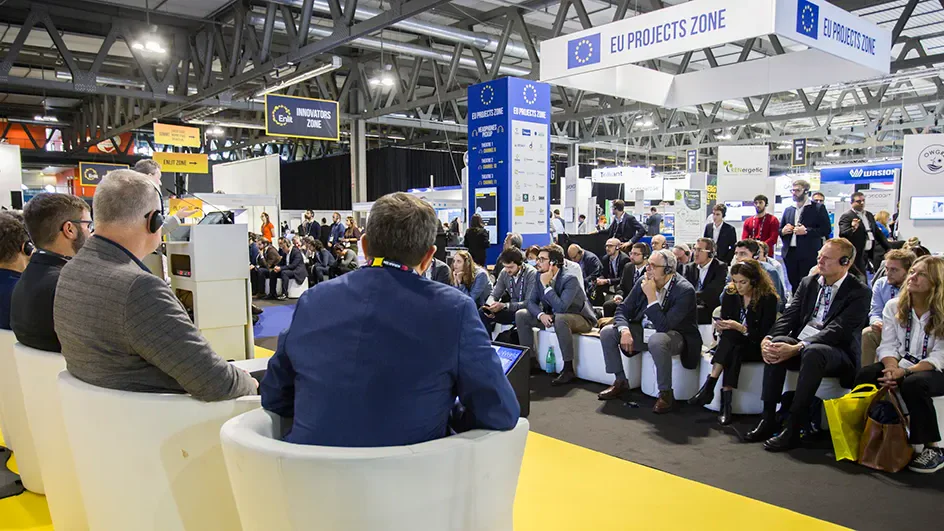
DEDALUS, together with SMARTeeSTORY, MetaBuild, ReSCHOOL, Enpower, and CRETE VALLEY, will take part in a Smart Energy Cluster workshop at Enlit Europe 2025, showcasing integrated innovations from smart buildings to energy communities.
The DEDALUS project will take part in the Bilbao event as a member of the Smart Energy Cluster together with SMARTeeSTORY, ReSCHOOL, Enpower, MetaBuild and Crete Valley. Each of these projects operates across different parts of the energy value chain, showcasing how Europe’s energy transition can be accelerated by combining building-level solutions with community-driven energy models and smart grid integration.
Operating across different segments of the energy value chain, these projects demonstrate how coordinated innovation can accelerate Europe’s clean-energy transition by combining digital tools, demand-response solutions, community-led models, and smart grid integration. By presenting as a unified group at Enlit Europe 2025, the projects highlight how joint approaches can overcome regulatory, technical, and behavioural challenges and support the deployment of accessible and scalable energy solutions across Europe.
About the workshop
Titled “From Buildings to Communities: Innovation in Energy Efficiency and Grid Integration“, the workshop aims to bring together the diverse innovations and solutions developed across these projects to explore how they can collectively accelerate the energy transition. Through two dedicated sessions, the event will highlight emerging strategies for smart building renovation, energy efficiency, flexibility management, and citizen engagement in local energy markets.
Participants will have the opportunity to engage in discussions on how digitalisation, advanced data integration, and innovative business models are reshaping the way energy is managed within buildings and communities. By fostering knowledge exchange and collaboration, the workshop aims to create a platform for stakeholders to explore how Europe can better integrate technology, finance, and community-driven initiatives to meet its ambitious climate and energy objectives.
Agenda
- 11:30 – 11:35: Overview of the Smart Energy Cluster – Vasilis Kotrogiannis (NTUA)
- 11:35 – 12:15 — Session 1 “Smart Buildings: Digital Innovation for Energy Retrofits”
Topics: Integration of IoT, digital twins, energy-efficiency financing, heritage-sensitive solutions, decarbonisation services - 11:35 – 11:40 SMARTeeSTORY: Smart Control Systems and Energy Optimisation for Historic Non-Residential Buildings – Matteo Porta (RINA-C)
- 11:40 – 11:45 META BUILD: Electrification technologies and novel digital applications towards buildings’ decarbonisation – Nikos Dimitropoulos (NTUA)
- 11:45 – 11:55 DEDALUS: Residential demand response for innovative services with social engagement – Diego Arnone (ENG)
- 11:55 – 12:15 Panel discussion Session 1 – moderated by Elissaios Sarmas (NTUA)
For further information and to register for the conference, click here.
(Photo Credits: ENLIT website)
Share:


Human-in-the-loop as part of the energy transition: from concept to practice
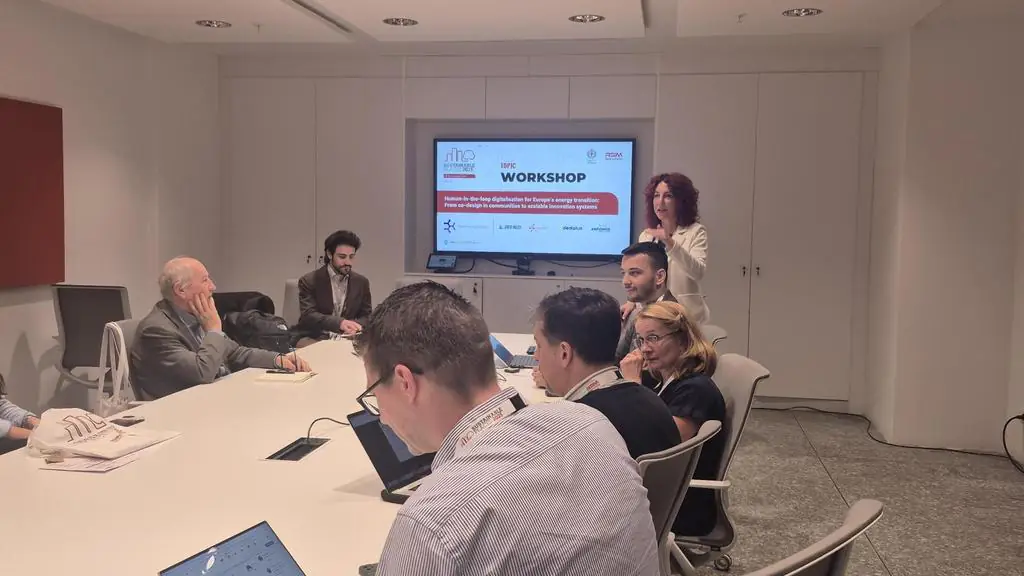
The key takeaways from the "human-in-the-loop" workshop held at Sustainable Places 2025 are now available. They draw on the insights of four EU-funded projects – DEDALUS, CRETE VALLEY, EnerTEF, and ENPOWER.
Digitalisation can only be truly transformative when it keeps humans at its core.
This was the guiding principle behind the workshop “Human-in-the-loop digitalisation for Europe’s energy transition”, organised by Fondazione ICONS – as leader of the DEDALUS dissemination and communication – under the umbrella of the Smart Energy Cluster during Sustainable Places 2025.
The workshop’s main messages are captured in the document “Human-in-the-loop in the Frame of the Energy Transition – Key Takeaways”.
The session brought together DEDALUS and three other EU-funded projects — CRETE VALLEY, EnerTEF, and ENPOWER — to explore how to move beyond the rhetorical use of the term human-in-the-loop and translate it into concrete, people-centred methodologies supporting Europe’s green and digital transitions.
Through an open and multidisciplinary exchange, participants discussed the barriers and enablers shaping the scalability of human-centred digitalisation, highlighting the crucial role of Social Sciences and Humanities, co-creation processes, and trust-building as prerequisites for social acceptance and long-term behavioural change.
Key insights include:
- Moving from concept to implementation by embedding user engagement and co-design from the very start.
- Recognising co-creation and SSH as the foundations of genuine human-centred innovation.
- Shifting from purely financial to social and intrinsic motivations, such as belonging and trust.
- Addressing the “language divide” between technical and social domains.
- Scaling human-in-the-loop approaches from buildings to communities.
The workshop’s conclusions call for a paradigm shift: digitalisation must empower people, not replace them.
Achieving this vision requires continuous collaboration between research, industry, policymakers, and citizens — ensuring that Europe’s energy transition is not only smart but also inclusive, just, and profoundly human.
(Photo Credits: Fondazione ICONS)
Share:
Other updates