DEDALUS unveils its educational kit to advance smart, flexible, and user-centred energy systems

The Educational Kit offers a clear introduction to the concepts, technologies, and real-world practices that enable smart and flexible energy management.
DEDALUS has released its new Educational Kit, a concise yet comprehensive resource designed for students, researchers, and professionals working on residential energy flexibility and user-centred demand response. The kit is available for download on the DEDALUS website.
Developed by Università Politecnica delle Marche, NTUA, CARTIF, and ICONS, the Kit introduces the fundamentals of residential demand response and explains why buildings—responsible for around 40% of Europe’s total energy consumption—play a pivotal role in the
The resource presents the project’s three core services:
• Energy Flexibility Tool (FLEXiT), which forecasts consumption, disaggregates loads, and quantifies flexibility potential
• Comfort Flexibility Service, enabling personalised comfort management during DR events through environmental sensing and machine-learning models
• District-Level Energy Management System, coordinating shared photovoltaics, batteries, and electric vehicle charging to optimise community-level self-consumption
To ground these concepts in real contexts, the Kit includes examples from three DEDALUS pilot sites (Austria, Italy, Greece), illustrating how technical, behavioural, and community-oriented approaches converge in practice. An annex provides an overview of previous EU projects that established the foundations for DEDALUS’ work.
Designed as both an introductory guide and a practical learning tool, the educational kit equips readers to understand—and contribute to—the future of smart, flexible, and inclusive energy systems.
“Educating students on demand response and energy saving is not only about technology—it’s about people, said Gian Marco Revel and Sara Casaccia, who coordinated the academic contribution to the Kit at Università Politecnica delle Marche. “With this kit, we hope to inspire future engineers, researchers, developers, and designers to create digital and innovative solutions that respect both human comfort and our planet’s resources”.
(Photo Credits: UnSplash)
Share:


The DEDALUS project holds a workshop on its educational kit

This workshop will offer an in-depth preview of DEDALUS’ newly released educational kit on residential flexibility and human-centred energy management.
DEDALUS is hosting an online workshop, titled “The Ins and Outs of Demand Response and Smart Living: Unpacking the DEDALUS Educational Kit”, a practical resource that helps students, educators, and professionals understand residential energy flexibility and its growing role in the energy transition.
The workshop will take place on Thursday, 4 December 2025, at 15:00 CET. Participants can register at this link.
The educational kit explains how homes and communities can contribute to grid stability through more flexible energy consumption. It brings together behavioural insights, digital technologies, and innovative management models, offering a multidisciplinary perspective on human-centred demand-side management.
Core themes featured in the workshop
The session will highlight the three key DEDALUS services that form the technical backbone of the educational kit:
- Energy flexibility tool, which uses advanced forecasting techniques and load-disaggregation models to estimate consumption, production, and flexibility potential at both building and community levels;
- Comfort flexibility service, integrating environmental data, IoT sensors, and human comfort preferences to balance well-being and energy efficiency during flexibility events;
- District-level energy management system, coordinating shared photovoltaic assets, battery storage, and electric vehicle charging to optimise renewable use and reduce energy costs in residential communities.
These components will be illustrated through real-world examples from the DEDALUS pilots in Italy, Austria, Greece, and Denmark, allowing participants to observe how different energy flexibility strategies are applied across various residential contexts.
Workshop Agenda (All times are in CET)
15:00 – 15:10
Welcome & introduction to the DEDALUS project – Diego Arnone (Engineering S.p.A.)
15:10 – 15:20
Presentation of the educational kit – Ilaria Orfino (Fondazione ICONS)
15:20 – 15:45
Technical insights featured in the educational kit
• Energy Flexibility Tool — Giannis Papias (NTUA)
• Comfort Flexibility Service — Richard Kaculi (Università Politecnica delle Marche)
• District-level Energy Management System — Bianca Viviana Martínez (CARTIF)
15:45 – 16:15
Roundtable with pilot leaders – Moderator: Alessandro Rossi, Engineering
• Italian Pilot — Gloria Corazza, ISSRA
• Austrian Pilot — Hemma Bieser, GreenPoint
• Danish Pilot — Thomas Lyngvad, FAELLESBO
16:15 – 16:25
Q&A session
16:25 – 16:30
Wrap-up and conclusions
A contribution to education and capacity building
With the release of its educational kit, DEDALUS provides educators and practitioners with a comprehensive, ready-to-use set of materials that translate the project’s integrated approach — technological, behavioural, and community-driven — into accessible learning content. The workshop will be the first opportunity to explore how these resources can be integrated into academic courses, training programmes, or community initiatives focused on energy transition and user engagement.
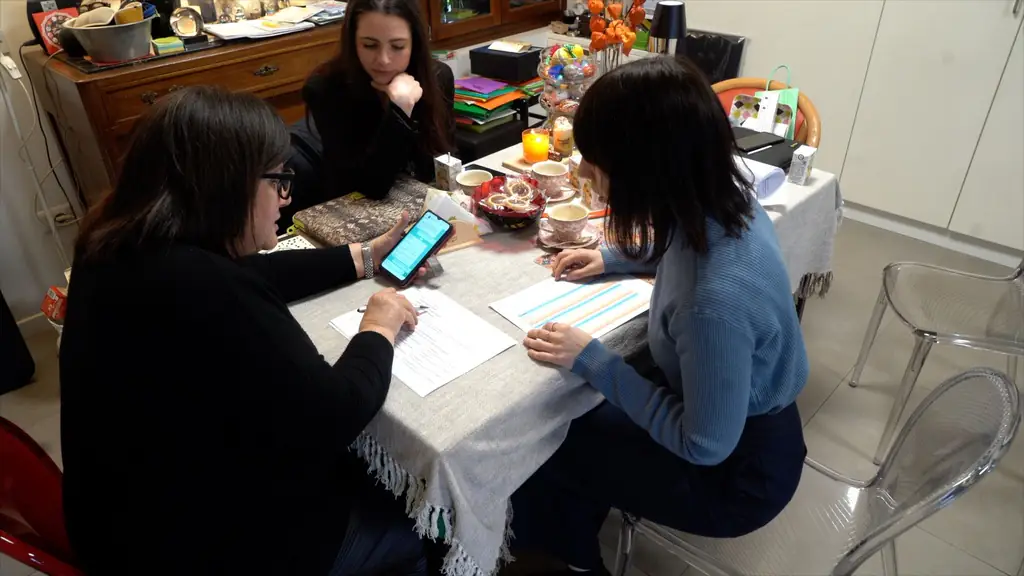
(Photo credits: Federico Beccari on Unsplash)
Share:
Other updates