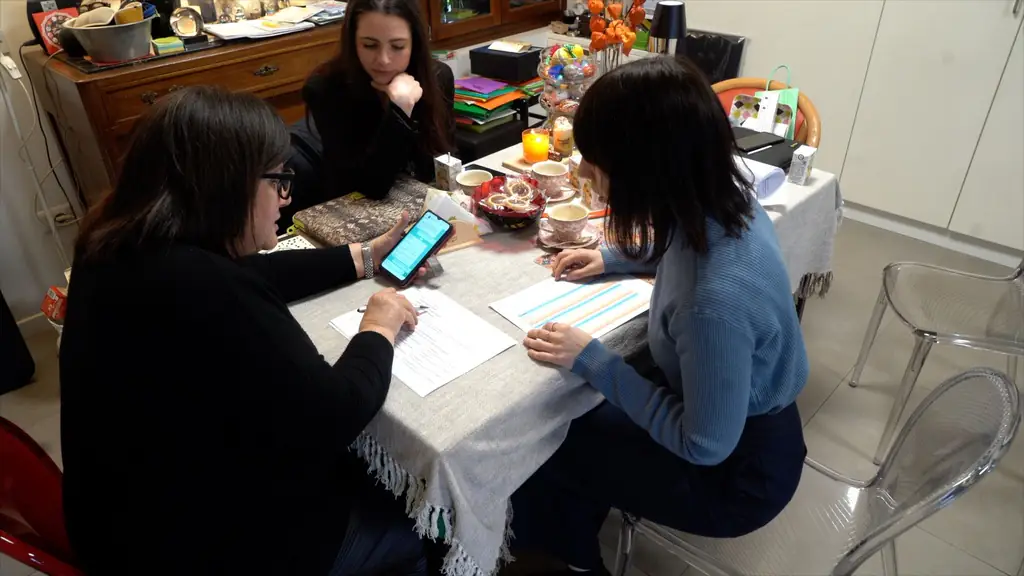
DEDALUS project team meets in Athens to discuss co-creation, interoperability, digital twins and more

The Dedalus project team has met in Athens to discuss its work to revolutionise residential demand-response as the project enters its second year.
Last September, DEDALUS partners met in Athens to discuss the significant strides the project has made in integrating advanced technological solutions for managing energy demand in residential settings, which make the system “agnostic” to different energy carriers. This approach is essential to fostering more sustainable energy consumption in households, thanks to an interoperable and secure infrastructure that prioritises flexibility.
A core aspect of the project is the integration of co-creation methodologies and socio-economic tools to engage users in energy decision-making. Through workshops held at pilot sites, DEDALUS collected direct feedback from users, enhancing the design and acceptance of the proposed solutions. This participatory process not only builds trust but also empowers users to play an active role in the energy transition within their own homes.
DEDALUS has developed key technologies, including digital twins, which facilitate flexible planning between resources and consumers, and advanced energy demand management models that are adaptable to various types of residential users. The infrastructure, based on the FIWARE Context Broker, ensures interoperability, allowing smart devices to interact seamlessly. Moreover, blockchain-based technologies have been implemented to protect data privacy and security, a crucial element in an increasingly interconnected energy landscape.
The pilot sites have benefited from the installation of smart meters, environmental sensors, and other essential devices for advanced energy demand management. A performance indicator system has also been developed to monitor the impact of these technologies, assessing their effects not only from a technological perspective but also in terms of social, economic, and environmental aspects. This approach allows residential consumers for a comprehensive understanding of how innovations affect users’ lives and overall energy efficiency.
On the technical side, the project has focused on refining the software architecture and integrating advanced security services. Machine learning analysis of consumption profiles helps to identify Demand Response (DR) potential, highlighting the role of user behavior and data integration. This collaborative effort provides valuable insights for advancing the residential DR sector and promotes intelligent energy use.
In recent months, DEDALUS has launched a pre-pilot phase to test technological solutions at the demo buildings. Although some devices are still being installed, they are expected to be fully operational by the end of 2024. During this initial phase, users have been actively involved, providing feedback that will help improve the solutions. A social engagement plan has also been developed to motivate residents and make them active participants in the DR programs.
One of DEDALUS’s key objectives is to ensure that the solutions developed can be replicated in other European contexts. To achieve this, the project has identified and continuously monitors key results, with the aim of developing effective business models and intellectual property strategies. In parallel, ongoing discussions with regulatory bodies and energy authorities are paving the way for the adoption of common standards, creating a favorable framework for secure data sharing and widespread implementation of Demand-Response solutions.
Share:


DEDALUS Discoveries | Revolutionising building energy management: AI-driven demand response for a sustainable future

This paper explains how the DEDALUS project leverages AI-driven methodologies to optimize demand response in building energy management, enhancing efficiency and sustainability by dynamically aligning energy consumption with market needs.
Engineering, CARTIF, and Università Politecnica delle Marche, as scientific partners in the DEDALUS project, have published a new paper titled “Methodological approach for optimizing demand response in building energy management through AI-enhanced comfort-based flexibility models.”
The paper introduces a novel methodology that leverages artificial intelligence (AI) to optimize demand response in building energy management systems, aligning energy consumption dynamically with efficiency objectives.
By analyzing historical data and real-time inputs, AI algorithms forecast energy needs and optimize the performance of critical building systems such as heating, ventilation, air conditioning, and lighting, striking a balance between energy efficiency and operational demands. This methodology is being tested across several pilot projects under the DEDALUS initiative, demonstrating its adaptability to various environments and its capacity to enhance demand response strategies.
The AI-driven approach provides significant demand-side flexibility for energy markets, promoting a more sustainable built environment by reducing carbon footprints and optimizing resource use in line with market requirements. The findings underscore AI’s transformative potential in building energy management, contributing to a more sustainable and resilient future in energy use.
The paper is available at this link for download.
(Photo Credits: iStock)
Share:
DEDALUS Discoveries | Machine learning framework boosts residential electricity clustering for demand-response
This NTUA's paper presents a machine learning framework to optimize demand-response programmes by clustering electricity consumers. Conducted with DEDALUS, it offers a scalable solution for targeted energy management.
The National Technical University of Athens (NTUA), one of the DEDALUS scientific partners, has completed a study on grouping residential electricity consumers, based on their historical electricity consumption, to create more targeted demand-response programmes.
This grouping will be used in almost every DEDALUS service at the end of the day, making the services more targeted per group.
Specifically, this paper introduces a machine learning-based framework to optimize demand response programmes. Using data from nearly 5,000 households in London, four clustering algorithms—K-means, K-medoids, Hierarchical Agglomerative Clustering, and DBSCAN—were evaluated to identify groups with similar consumption patterns.
The problem was reframed as a probabilistic classification task, leveraging Explainable AI to improve model interpretability. The optimal number of clusters was found to be seven, although two clusters, comprising around 10% of the data, exhibited high internal dissimilarity and were excluded from further consideration. This framework offers a scalable solution for utility companies to enhance the targeting and effectiveness of demand response initiatives.
“Our research aims to tackle a key challenge in energy management: efficiently identifying and classifying household energy consumption patterns to enhance the implementation of Demand Response programs. Optimizing household energy use is increasingly critical, both for promoting environmental sustainability and for enabling utility companies to deliver more targeted and effective DR solutions. This work aligns with the overarching objectives of the DEDALUS project, which seeks to expand residential participation in DR programs across Europe by bringing together key stakeholders and advancing smarter energy management strategies”, said Vasilis Michalakopoulos – one of the paper’s authors.
The paper, in Open Access, is available here for download.
(Photo Credits: iStock)
Share:
United voices for an energy-efficient and sustainable building sector in Europe

DEDALUS, BuildON, DigiBuild, PROBONO, and TwinEU projects join forces to contribute to the energy efficiency of the building sector in Europe.
“Unity creates strength”.
This principle, applicable to every area of our life, is well understood by the Dedalus, BuildOn, DigiBUILD, PROBONO, and TwinEU projects, which have joined forces to promote an energy-efficient and sustainable building sector in Europe.
These four projects will organize joint events and communication campaigns, and mutually promote each other’s results and achievements. The aim is to create a stronger impact on society and facilitate the uptake of the project findings and innovations.
Dedalus, BuildOn, DigiBUILD, PROBONO, and TwinEU are funded by the European Union’s Horizon Europe research and innovation programme under these number of grant agreements, respectively: 101103998, 101069658, 101069658, 101037075, and 101007319.
Share:
Dedalus joins BRIDGE initiative
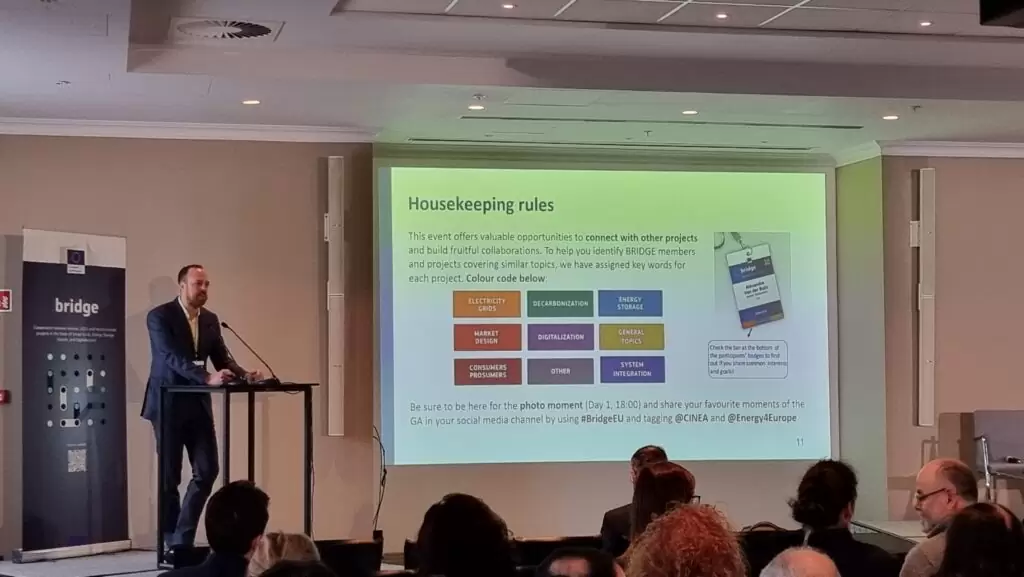
Dedalus has joined the BRIDGE initiative to give its contribution, together with other EU-funded projects - to the decarbonization and energy efficiency of the European building sector. Our project has been also participating in the four BRIDGE Working groups: consumer and citizen engagement, data management, business models, and regulatory.
Last April, Dedalus participated in the BRIDGE General Assembly 2024, which is an initiative of the European Commission and CINEA, aimed at fostering collaboration among projects funded under Horizon 2020 and Horizon Europe in the areas of Smart Grids, Energy Storage, Islands, and Digitalisation.
The General Assembly is a key annual event that gathers participants to share project outcomes, discuss challenges, and set future directions for collaboration. The 2024 meeting, held in Brussels, involved over 220 representatives from 92 different projects and featured both in-person and online participation.
Key highlights from the assembly included presentations on major regulatory updates and policy developments, such as the EU Grid Action Plan, regulatory frameworks for demand response, and the Net-Zero Industry Act. Several completed projects presented their key outcomes and lessons learned, while new projects showcased their work and expected results. A significant focus was placed on consumer and citizen engagement, with discussions about smart tools, engagement strategies and indicators for measuring citizen involvement in energy projects.
The Regulation Working Group emphasised regulatory challenges in energy markets, such as market access, peer-to-peer energy sharing, and coordination of energy and flexibility markets. Discussions also addressed the integration of new topics, including e-mobility, artificial intelligence, and cybersecurity.
The Business Models Working Group explored tools for building business models, methods for quantifying benefits, and the use of data value chains. Meanwhile, the Data Management Working Group focused on secure data exchange, interoperability, and the development of a use-case repository.
Overall, the assembly identified several areas for improvement, including enhanced communication among working groups, more regular meetings and greater engagement with external initiatives. Future steps include increased support for policy development, the introduction of new topics, and further exploration of synergies between projects to strengthen collaboration across Europe.
Dedalus will participate in the BRIDGE initiative activities for the next two years, collaborating through its network of Consortium partners in the four working groups mentioned above
Diego Arnone, as Dedalus coordinator, said:” In my role as a coordinator of the DEDALUS project and on behalf of the entire Dedalus consortium, I’m proud to bring our research activities to the BRIDGE Initiative. The osmotic relationship between the different projects within BRIDGE is greatly beneficial, as it facilitates result sharing, discussions on open issues, and finding solutions for topics that are common to most of the participating projects. It is a collaborative and stimulating environment where, through synergies among the various EU-funded projects involved in the initiative, it will be possible to make a tangible contribution to achieving the decarbonization and energy efficiency goals set by Europe for 2030″.
At this link are available the main highlights of the last General Assembly.
(Photo Credits: European Commission, BRIDGE Initiative)
Share:
Dedalus enters the Smart Energy Cluster

During 2023, Dedalus has joined the Smart Energy Cluster to collaborate with other projects on advancing energy solutions across various segments. Discover the goals to achieve together with other projects!
Dedalus is now part of the Smart Energy Cluster, a collaborative initiative dedicated to integrating different energy services while incorporating non-energy benefits.
The mission of this initiative is to overcome market fragmentation and foster cooperation across different sectors. By bridging gaps and creating common ground for business development, the cluster promotes a unified approach to advancing energy solutions across various segments.
The Smart Energy Cluster brings together 26 pioneering projects, all committed to supporting each other in the development, conceptualization, and deployment of new business models and concepts. These efforts are designed to fully unlock the economic potential and broader benefits of integrated energy services.
The cluster is devoted to the dissemination, communication, and exploitation of project activities and results, aiming to amplify the impact of each project. This includes integrating innovative and smart service offerings, reducing energy costs for end users, and making investments in sustainable energy more accessible.
The foundations of the Smart Energy Cluster are:
- Collaborative Synergies
- Exchange & Engagement
- Combined Expertise
- Unified Action
- Strategic Development
For further insights into the #SmartEnergyCluster and to stay updated on our progress, visit the website.
Share:
Other updates