Invisible is better: Technology as a servant to empower the vulnerable groups in the energy transition
From ageing populations to multicultural neighbourhoods, a just transition demands more than algorithms. It requires inclusive mentoring and a clear understanding of those most at risk of being left behind. Otherwise, experts warn, we risk designing technology for a population that no longer exists.
“In summer it gets very hot here, and in winter it’s very cold. So I was curious to see if there was a way to overcome this inconvenience.” These are not exceptional words; anyone might use them to explain why they decided to get involved in an experiment to better handle domestic energy. What makes them exceptional is that, in this case, they are spoken by 72-year-old Simonetta Tazzer. An age that makes many things more difficult, especially when technological adaptations are required.
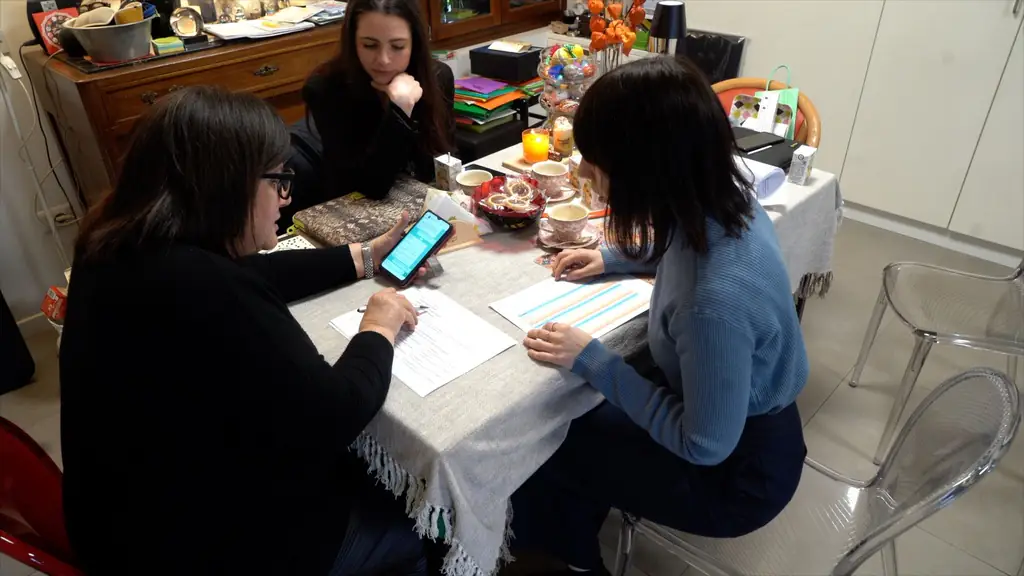
The experiment in question is that of Borgo Mazzini Smart Cohousing in Treviso, part of the Italian pilot for the DEDALUS project—an initiative focused on human-centred energy innovation. Here, the challenge was to ensure that innovation remains an invisible ally rather than a technical burden. Silvia Palma, a project manager at EnEA who worked closely on the Treviso pilot, explains that the residents’ feedback was the actual engine of the development: “Simonetta collaborated with us to help train the services and algorithms, enabling us to personalise her apartment’s comfort levels and encouraging energy flexibility while strictly maintaining her domestic well-being.” Every morning, Simonetta receives a WhatsApp message with three simple temperature options. For her, the logic is straightforward: “It is a very simple thing that even I can understand, even though I am not technological at all and I am of a certain age.”
However, the path to inclusion is rarely straight. In the Danish DEDALUS pilot in Herning, researchers confronted a complex social reality: the attempt to engage a multicultural neighbourhood through traditional communication methods was met with near-total silence. Sending letters or providing apps to a community where language barriers are significant and institutional trust is low proved ineffective. Thomas Lyngvad and Henrik Lund Stærmose, who oversaw the pilot, faced a human barrier: a deep suspicion of authorities and the absolute priority of basic needs among refugee families who, fearing high costs, often turn their heating off completely, living in temperatures as low as 15 degrees.
This gap between technical dreams and human reality is well known to Michael Brenner-Fließer, a sociologist at Joanneum Research in Graz, Austria, and Chair of the Working Group on Consumer and Citizen Engagement at BRIDGE, the European Commission’s initiative that unites dozens of smart energy projects. “Generally, we have made significant progress with technical tools, but we underestimated the social component and the reluctance of human beings, as creatures of habit, to change,” Brenner-Fließer observes. To overcome this, BRIDGE is promoting the concept of “Societal Readiness“—a requirement to ensure that tools are designed to be implementation-ready from a human perspective before they even hit the market.
This search for a “human bridge” finds a powerful parallel in the SocialNRG project, which operates in the social housing pilot of Cinisello Balsamo (Milan) to tackle energy poverty through the creation of renewable energy communities. Here, vulnerability is often linked to an information deficit that exacerbates financial hardship. Sara Zoni, representing Innovacoop, notes that many residents—mainly seniors over 80—are excluded simply because they lack the tools to navigate a complex energy market. Zoni emphasises that understanding an electricity bill is a challenge even for professionals, let alone for elderly residents. This literacy gap leads to inefficient home use and leaves citizens exposed to risks: “They reported frequently falling victim to phone scams regarding energy contracts,” Zoni explains, “which is why they asked for an awareness and information path.” The solution implemented by SocialNRG is “human mentoring” through the TED (Tutor per l’Energia Domestica, or Household Energy Tutors) – specialised figures who provide free support in deciphering utility bills and choosing fair contracts.
Brenner-Fließer confirms that this is the only way forward: “Establishing trust ultimately depends on solution providers building genuine, trust-based relationships with citizens. This is not an easy task and requires significant time and effort—often invisible in successful outcomes, but very apparent when it fails.” According to the BRIDGE chair, the most effective approach is working with local facilitators who already enjoy the community’s trust, whether they are local leaders, skilled tradespeople, or municipal tutors.
For Alexandra Revez, a Research Fellow at University College Cork, identifying these “invisible” groups is the real challenge. She argues that we are “always looking for the tech fix when there’s a lot of social and political fixes that we need to follow through as well.” Revez points specifically to single-parent families—most often headed by women—and people with disabilities as being at high risk of political and social exclusion. Participation requires time and mobility that these groups often do not have. To foster their involvement, she suggests providing concrete logistical support, such as childcare services during community meetings or tailored accessibility tools, ensuring the transition does not become a privilege for the few.
This analysis finds its ultimate pragmatic confirmation in the words of Diego Arnone, coordinator of the DEDALUS project. For many, the “green revolution” is a distant thought compared to daily survival. Arnone uses a stark metaphor: for many vulnerable families, talking about the energy transition is “like talking about pastries to those who lack bread and water.”
However, Arnone believes the problem goes deeper into the very fabric of our changing continent. “We are designing for a society that is rapidly ageing, while the ‘fresh blood’ is coming almost exclusively from migratory trends. To ignore these demographic shifts is to design technology for a population that doesn’t exist,” he warns. To prevent energy digitalisation from becoming a new form of “high-tech exile” for the elderly or the newly arrived, Arnone argues that technology must become a servant, not a master. “In our pilots, we have seen that the most successful innovation is the one you don’t even notice. It must adapt to the rhythm of the home, not the other way around.”
As highlighted during the 2025 International Social Housing Festival, resident participation is no longer a procedural box to tick, but the cornerstone of social sustainability. By starting from the real-life needs of people like Simonetta, the energy transition can finally move from being a technical mandate to a shared human journey.
Article written by Selene Verri
(Photo Credit: Pexels)
Share:


The Energy Transition Is Human: Trust, Habits and the ‘Not Zero’ Margin
Beyond technical fixes: from bridging the democratic deficit to the 'social fix', how community trust, inclusive mentoring and the protection of domestic rituals are turning passive consumers into active energy citizens.
“Official complaints against co-operative energy projects are ten times lower than those against commercial ones. That’s huge. But that’s not zero.” For Jan De Pauw, energy advisor for the Belgian city of Eeklo and a leading member of the Ecopower energy community, these figures reveal a vital truth: the energy transition is, first and foremost, a human endeavour. While a small margin of resistance is perhaps inevitable, the overwhelming success of the co-operative model proves that when citizens are brought into the heart of the process, they don’t just accept change – they embrace it.
This resilience of the co-operative model stems from a simple yet profound shift in perspective. At its heart, an energy co-operative is a collective of citizens who come together to own, manage, and produce their own renewable resources.
Unlike traditional utility companies, where decisions are made in distant corridors of power, these communities operate on the democratic principle of “one member, one vote.” As De Pauw explains, “A co-operative is an ideal model to have in place because you can become a member just by buying one share of €125 or €250.”
This ownership is the primary driver of social acceptance; when a wind turbine or a solar park is no longer perceived as a foreign object imposed by a profit-seeking corporation but as a shared local asset, the dynamic of distrust is dismantled.
For De Pauw, the ultimate goal is clear: “People should have the right to use the produced energy at cost from the community.” This sense of belonging turns a technical project into a social one, yet it also highlights a broader cultural blind spot in how we approach environmental change.
For too long, the European energy debate has been dominated by what experts call the ‘technical fix’. Whether it is the installation of smart meters or the mass adoption of e-mobility, the spotlight remains stubbornly on the machine rather than the user.
Alexandra Revez, a research fellow at University College Cork, argues that the solution lies in a more democratic approach based on three essential pillars. First, there is the ‘robustness of facts’, meaning that decisions must be grounded in solid, well-communicated information. Second, we need a ‘collective vision’, where people look beyond their own needs to consider the impact on others and future generations. Finally, she points to the ‘long term’, stressing that policies must be designed to last for 10 or 15 years, moving away from the logic of constant emergencies.
This gap between policy and people is where practitioners like Julia Blanke, a behavioural psychologist also based in Cork, step in. To ground the transition in reality, Blanke, who is involved in the ENPOWER project, advocates for a hands-on “social fix” through community workshops where residents and experts work side by side. “The goal is to gather information,” she explains, “which we can feed back to the tool developers so that they can develop their tools accordingly, so that they are more adjusted and more adaptable to the people who are supposed to use those energy tools, applications, and platforms.” By designing solutions with the people rather than for them, the project moves from a top-down requirement to a shared effort where residents help shape their own energy future.
This quest for social fixes is often hindered by a silent, invisible barrier: the language gap. Across several pan-European initiatives, a friction exists between the engineers designing the algorithms and the social scientists tasked with ensuring their acceptance. It is a context where technical people and citizens essentially speak different languages.
Bridging this gap requires a constant effort of “translation,” turning abstract grid requirements into local narratives that resonate with a community’s identity. Julia Blanke emphasises that engaging residents is not something that can be automated through an app or a portal. “It is really face-to-face, one-to-one work,” she explains. “It is very time-consuming and at the moment not scalable.” However, she believes this personal touch is the only way to spark a “snowball effect” of interest, where people see their neighbours participating and think, “Look, they’re doing it, it might be interesting, I’ll have a look.”
Without this human mediation, even the most sophisticated smart home system remains an intrusive “black box,” particularly when it challenges our most deeply held rituals. The common assumption that financial incentives are the primary driver of change is a myth that researchers are increasingly working to debunk.
Diego Arnone, an expert in energy systems at Engineering SpA and coordinator of the DEDALUS project, highlights that saving a few euros a year is rarely enough to trigger a lifestyle revolution. Arnone points out that we are essentially creatures of habit, and comfort often outweighs logic. In his experience, asking a resident to shift their routine—such as moving the laundry cycle to midday to match solar production—is not a simple technical request; it is an intrusion into the sanctity of the home.
“Asking a family to change their laundry habits to save a few cents is simply not effective,” Arnone observes. “We need to respect the sanctity of their daily rituals.” For the transition to take root, technology must become “invisible” and respect the domestic rhythm rather than disrupt it.
This is where technical innovation must meet human empathy. Arnone points to non-intrusive load monitoring as a crucial tool for non-invasive engagement. These algorithms study the “waveform of a home’s energy absorption” to identify individual appliances without the need for cameras or intrusive sensors. “Every single device has a footprint,” says Arnone.
By using software to recognise when a washing machine or an iron is turned on, the system notably slashes costs and respects the privacy of the residents. The goal is to lower the psychological barrier to entry, ensuring that smart energy management does not come at the cost of personal comfort. Yet, making the transition frictionless for the average household is only half the battle; the other half is still ensuring that it does not become a luxury reserved for the few.
To reach that final margin of resistance, the transition must be inclusive by design; a mission that sits at the core of Housing Europe’s work. Dara Turnbull, research coordinator at the federation, explains that involving residents is the only way to make the transition socially sustainable. “Even things like reading an electricity bill or understanding how to correctly use your home to be more energy efficient is actually something that many people living in social housing lack and it leads them to maybe behave or use their home in certain ways that are not helping them to alleviate any energy poverty issues that they may be encountering.” So, even if founding an energy community is “great”, any energy project needs to include coaching and mentoring, especially for the most vulnerable – such as senior citizens – who are often bypassed by high-tech revolutions.
This search for equity leads directly to the ground-level experiments in cities like Eeklo, where the community has found a way to bridge the financial gap for those left behind. “For those people who can’t afford the €250 share, the city of Eeklo found a solution,” explains Jan De Pauw. The municipality pre-finances the social share so that vulnerable families “don’t have to put money on the table to become a member.” Instead, they repay the loan with a small portion of the savings they make on their electricity bills. After approximately six years, the city recovers the investment and can support another household, proving that energy can be a tool for social welfare rather than a financial burden.
Despite these frameworks, one must accept that there is no magic wand. Léo Maenner, a manager at the Spanish co-operative Som Energia, with twenty years of experience in renewable energy and co-operatives, often finds himself navigating the gap between technical projects and the concerns of local residents. Maenner explains that some opposition is entirely emotional, linked to a profound sense of loss regarding landscape and identity.
“We can work and work, we can modify everything, but in the end, it won’t pass,” Maenner says with the weariness of experience. He points out a curious sociological trend: the most stubborn resistance often comes from “neo-rural” residents rather than historical inhabitants. Maenner explains that people who have recently moved to the countryside often feel they have “purchased the landscape” along with their home. For these individuals, a solar panel is a violation of their personal “ideal” of the territory. Maenner concludes that “It is a question of individual interest and a perceived loss of control” that no amount of technical data or discussions can satisfy.
Acknowledging this recalcitrant margin—the ‘not zero’—is perhaps the most honest step towards a truly human-centred transition. Because while the grid is made of wires and software, it is ultimately shaped by habits, trust, and resistance.
These are things no technology, on its own, can ever fix.
Article written by Selene Verri
(Photo Credit: Bancha Singchai on iStock by Getty Images)
Share:
Other updates