DEDALUS unveils its educational kit to advance smart, flexible, and user-centred energy systems

The Educational Kit offers a clear introduction to the concepts, technologies, and real-world practices that enable smart and flexible energy management.
DEDALUS has released its new Educational Kit, a concise yet comprehensive resource designed for students, researchers, and professionals working on residential energy flexibility and user-centred demand response. The kit is available for download on the DEDALUS website.
Developed by Università Politecnica delle Marche, NTUA, CARTIF, and ICONS, the Kit introduces the fundamentals of residential demand response and explains why buildings—responsible for around 40% of Europe’s total energy consumption—play a pivotal role in the
The resource presents the project’s three core services:
• Energy Flexibility Tool (FLEXiT), which forecasts consumption, disaggregates loads, and quantifies flexibility potential
• Comfort Flexibility Service, enabling personalised comfort management during DR events through environmental sensing and machine-learning models
• District-Level Energy Management System, coordinating shared photovoltaics, batteries, and electric vehicle charging to optimise community-level self-consumption
To ground these concepts in real contexts, the Kit includes examples from three DEDALUS pilot sites (Austria, Italy, Greece), illustrating how technical, behavioural, and community-oriented approaches converge in practice. An annex provides an overview of previous EU projects that established the foundations for DEDALUS’ work.
Designed as both an introductory guide and a practical learning tool, the educational kit equips readers to understand—and contribute to—the future of smart, flexible, and inclusive energy systems.
“Educating students on demand response and energy saving is not only about technology—it’s about people, said Gian Marco Revel and Sara Casaccia, who coordinated the academic contribution to the Kit at Università Politecnica delle Marche. “With this kit, we hope to inspire future engineers, researchers, developers, and designers to create digital and innovative solutions that respect both human comfort and our planet’s resources”.
(Photo Credits: UnSplash)
Share:


DEDALUS to lead workshop on smart buildings and energy communities at Enlit Europe 2025
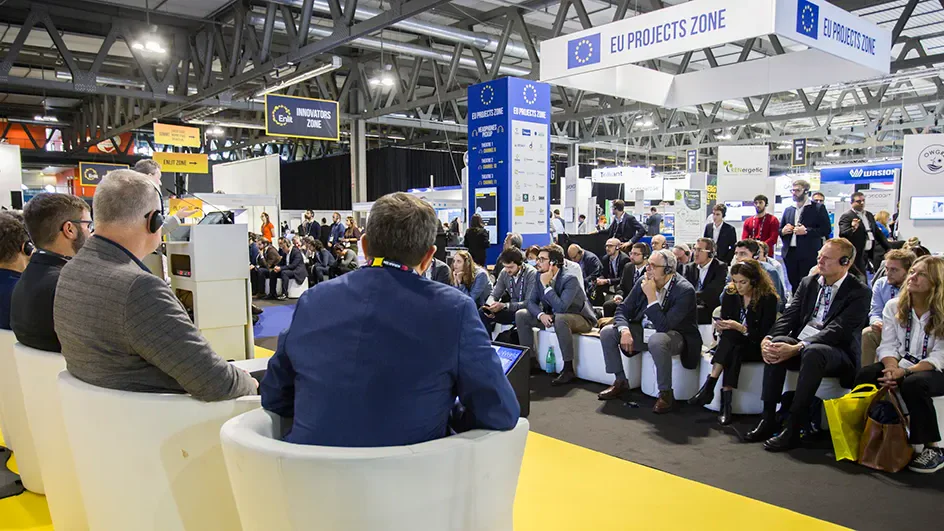
DEDALUS, together with SMARTeeSTORY, MetaBuild, ReSCHOOL, Enpower, and CRETE VALLEY, will take part in a Smart Energy Cluster workshop at Enlit Europe 2025, showcasing integrated innovations from smart buildings to energy communities.
The DEDALUS project will take part in the Bilbao event as a member of the Smart Energy Cluster together with SMARTeeSTORY, ReSCHOOL, Enpower, MetaBuild and Crete Valley. Each of these projects operates across different parts of the energy value chain, showcasing how Europe’s energy transition can be accelerated by combining building-level solutions with community-driven energy models and smart grid integration.
Operating across different segments of the energy value chain, these projects demonstrate how coordinated innovation can accelerate Europe’s clean-energy transition by combining digital tools, demand-response solutions, community-led models, and smart grid integration. By presenting as a unified group at Enlit Europe 2025, the projects highlight how joint approaches can overcome regulatory, technical, and behavioural challenges and support the deployment of accessible and scalable energy solutions across Europe.
About the workshop
Titled “From Buildings to Communities: Innovation in Energy Efficiency and Grid Integration“, the workshop aims to bring together the diverse innovations and solutions developed across these projects to explore how they can collectively accelerate the energy transition. Through two dedicated sessions, the event will highlight emerging strategies for smart building renovation, energy efficiency, flexibility management, and citizen engagement in local energy markets.
Participants will have the opportunity to engage in discussions on how digitalisation, advanced data integration, and innovative business models are reshaping the way energy is managed within buildings and communities. By fostering knowledge exchange and collaboration, the workshop aims to create a platform for stakeholders to explore how Europe can better integrate technology, finance, and community-driven initiatives to meet its ambitious climate and energy objectives.
Agenda
- 11:30 – 11:35: Overview of the Smart Energy Cluster – Vasilis Kotrogiannis (NTUA)
- 11:35 – 12:15 — Session 1 “Smart Buildings: Digital Innovation for Energy Retrofits”
Topics: Integration of IoT, digital twins, energy-efficiency financing, heritage-sensitive solutions, decarbonisation services - 11:35 – 11:40 SMARTeeSTORY: Smart Control Systems and Energy Optimisation for Historic Non-Residential Buildings – Matteo Porta (RINA-C)
- 11:40 – 11:45 META BUILD: Electrification technologies and novel digital applications towards buildings’ decarbonisation – Nikos Dimitropoulos (NTUA)
- 11:45 – 11:55 DEDALUS: Residential demand response for innovative services with social engagement – Diego Arnone (ENG)
- 11:55 – 12:15 Panel discussion Session 1 – moderated by Elissaios Sarmas (NTUA)
For further information and to register for the conference, click here.
(Photo Credits: ENLIT website)
Share:
Roundtable set to tackle five major challenges of demand response regulation

European Green Cities, a partner in the DEDALUS project, is hosting a roundtable to explore how regulations can evolve to better support demand response. The discussion will focus on five key challenges currently hindering its development.
European Green Cities, as a partner of the DEDALUS project, is hosting a roundtable to tackle a key question: how should national and EU regulations evolve to truly enable the growth of Demand Response programmes?
The event will take place on Tuesday 27 May 2025 from 9.30 AM to 12 PM (all times in CEST),and it will be open to the public.
With input from industry experts, scientific and technological partners of the project, and institutional representatives, the discussion will focus on five major challenges currently hindering the development of demand response:
- lack of effective incentives to engage key stakeholders;
- absence of a clear and consistent regulatory framework;
- interoperability issues across national infrastructure systems;
- entry barriers imposed by DSOs and TSOs;
- complexities in data management and privacy protection.
Confirmed speakers include:
- Thomas Kawam (Policy Officer – Internal Energy Market at DG ENER, European Commission)
- Andrei Vladimir Litiu (Executive Director, EPB Center and Next Gen EPC Cluster)
- Maria Capogreco (Chair of HWG, RHC-ETIP)
- Saska Petrova (Professor of Human Geography, Departmental Research Director, University of Manchester)
- Gusts Kossovics (Managing Director, EUBAC)
- Quentin Donnette (Head of Research and Projects, smartEn – Smart Energy Europe)
- Panos Skaloumpakas (Pilot site coordinator at the DEDALUS project, based at National Technical University of Athens / NTUA)
- Athanasios Papakonstantinou (Innovation Coordinator at the DEDALUS project, R&D Project Manager and Energy Management at HERON)
The roundtable will be moderated by Katerina Sianni (DEDALUS project partner; Data Scientist & Data Visualization Senior Expert at the Energy Policy Unit, NTUA).
Full agenda and access details are available on the European Green Cities website.
(Ph. Randy Fath on Unsplash)
Share:
DigiBUILD to hold conference on its pioneering data-driven services for climate-neutral buildings
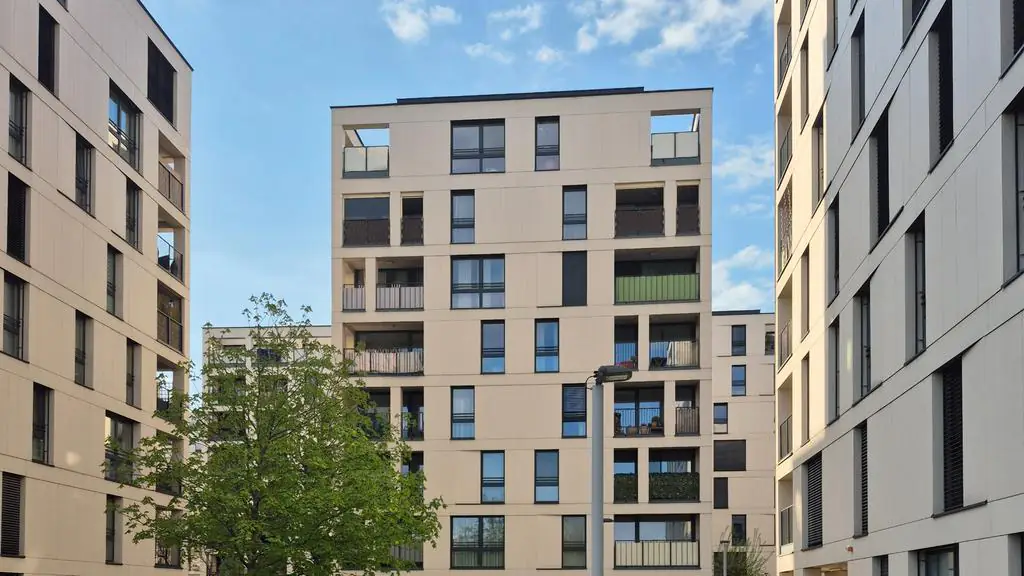
DigiBUILD’s final event celebrates three years of innovation in the digitalisation of the building sector and pass the torch to DEDALUS, which will build on its legacy to advance smarter, greener, and more connected infrastructures across Europe.
The final event of the Horizon Europe project DigiBUILD, one of the DEDALUS sister projects, is approaching and will take place on Tuesday, 20 May 2025 in London and online. This full-day hybrid event will mark the culmination of three years of research and innovation aimed at accelerating the digital transformation of the building sector.
From AI-based tools to data-driven services and digital twin solutions, DigiBUILD has developed a comprehensive suite of technologies to improve building performance, enable evidence-based policymaking, and support end-users in managing infrastructures more efficiently.
Highlights of the event include:
- A presentation of DigiBUILD’s core results and technological breakthroughs
- Live demonstrations and insights from real-world pilot sites across Europe
- A discussion on policy and market uptake
- A guided tour of the UCL demonstration site
“DigiBUILD has demonstrated the power of data collection, data pre-processing and data-driven services, including the adoption of digital twins, as well as the importance of co-creation and co-design in the process of boosting energy efficiency in buildings.
Its innovative tools and open standards now serve as a foundation for the ongoing DEDALUS project that continues the mission of smarter, greener construction, better integrated with the energy grids through the Demand Response mechanism. This marks a key step forward in the EU’s digital and sustainable transformation of the built environment”, stated Diego Arnone – coordinator of DigiBUILD and DEDALUS.
The event will bring together researchers, industry stakeholders, public authorities, and policymakers to reflect on the project’s outcomes and discuss the road ahead for smart, sustainable, and inclusive buildings.
For more information and find out the agenda, click here.
Share:
DEDALUS to co-organise AI and data analytics workshop at IISA 2025
DEDALUS is co-organizing a workshop as part of IISA 2025. The event will gather top AI researchers, energy specialists, and policymakers to discuss innovative approaches that are expected to shape the future of energy analytics over the coming decade.
The DEDALUS project is co-organising the 5th International Workshop on AI & Data Analytics in the Energy Sector, scheduled for 10–12 July 2025 in Mytilene, Greece. This workshop is a key component of IISA 2025.
Coordinated by the DDS Lab at NTUA, the workshop brings together leading AI researchers, energy experts, and policymakers to explore cutting-edge methodologies poised to redefine the next decade of energy analytics.
The event is closely linked to research activities from several Horizon Europe and LIFE projects,including Crete Valley, EnerTEF, ENPOWER, ENERGATE, METABUILD, DATAWiSE, Hedge-IoT, BuildON, CLIMRES, and BUILDSPACE.
“In a world racing toward digitalisation and decarbonisation, data is the new energy. This workshop is a hub for those tackling the complex, high-impact problems at the intersection of AI, analytics, and the energy transition. DSS Lab, EPU NTUA, is thrilled to lead this effort, particularly through our work in the DEDALUS project, where we’re shaping the future of interoperable, intelligent energy solutions.”, stated Elissaios Sarmas – Senior researcher associated at DSS-NTUA and scientific coordinator of DEDALUS.
The workshop will delve into topics such as:
- Generative AI & Large Language Models for real-time energy system management
- AI-powered digital twins for self-learning buildings and grids
- Neuromorphic AI architectures for ultra-low-power energy optimization
- Swarm intelligence & agent-based models for decentralized energy networks
- Federated learning & privacy-preserving AI in energy ecosystems
- Quantum machine learning for next-generation energy forecasting
- Blockchain & AI convergence for secure and autonomous energy trading
- Self-healing energy networks powered by reinforcement learning
A key feature of this year’s workshop is a new session designed by the Smart Energy Cluster — of which DEDALUS has been an active member since 2023 — bringing together leading EU projects committed to advancing smart energy solutions.
Structured as a “Visionary Roundtable”, this segment will offer a series of enlightening talks and interactive discussions, showcasing the breakthroughs, market relevance, and real-world applications of the Cluster’s latest projects.
DEDALUS will be represented in this session by Alessandro Rossi, senior researcher and project manager at Engineering S.p.A.
For more information about the workshop, the deadline for the paper proposal, and to register, please visit the official website.
Image by Joe from Pixabay
Share:
DomX showcases tangible outcomes of DEDALUS at Mobile World Congress 2025
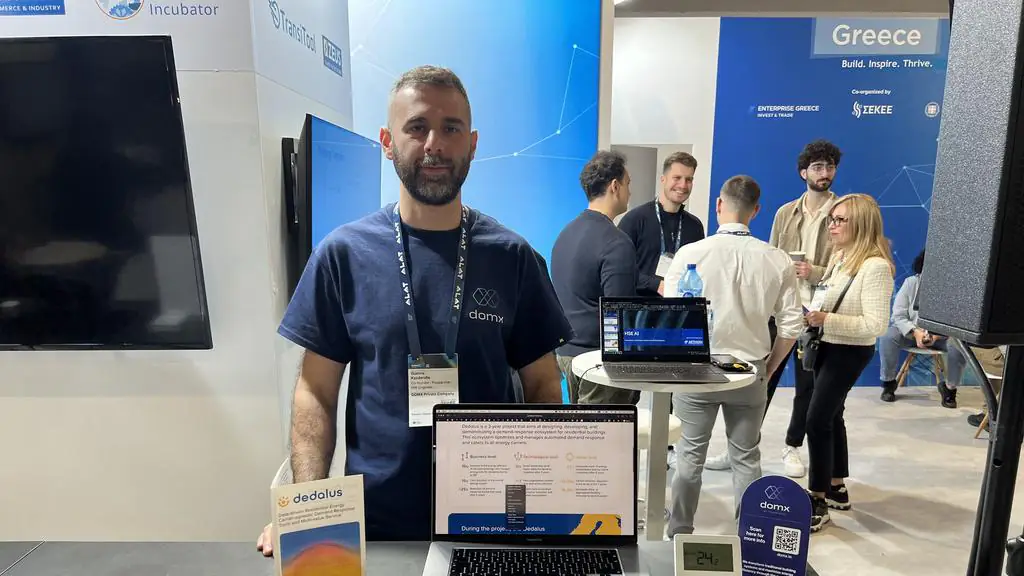
As a partner in the DEDALUS project, DomX showcased its latest innovations at the Mobile World Congress 2025, presenting the functionality and early results of its clustering service aimed at improving demand forecasting and enabling intelligent demand response schemes.
Partner in the DEDALUS project, DomX, presented the project’s lastest innovations to an international audience at the Mobile Word Congress 2025.
On the first day of the event, at the Greek national booth, the DOMX team introduced the functionality and early results of its clustering service, designed to enhance demand forecasting and support the deployment of intelligent demand response schemes. The algorithm segments the households involved in the Greek pilot into homogeneous groups, based on parameters such as heat growth dynamics or potential for energy savings.
This categorisation marks a crucial step towards tailoring interventions and implementing targeted optimisation strategies. In the initial phase of the gas pilot (as a part of the Greek pilot) the clustering algorithm has already identified those households with the highest potential for improved efficiency. For these households, DomX is rolling out optimised demand response schemes aimed at reducing both energy consumption and CO2₂ emissions.
The approach includes active user engagement through behavioural nudging, encouraging end-users to adjust specific parameters of their heating systems. The goal is to promote smoother, more sustainable energy behaviour over time.
The presentation of these outcomes at one of the world’s leading technology innovation events attracted significant interest from international stakeholders, potential replicators, and investors. The DEDALUS project was highlighted as a core component of DOMX’s vision for a smarter, more sustainable, data-driven energy future.
(Photo Credits: DomX)
Share:
Digital Twins and Electricity – TwinEU project to hold a webinar on 6 March
The DEDALUS coordinator will join TwInsider Session #1 as a panelist, sharing insights on digital twins, AI, and blockchain to enhance energy management and grid flexibility
Fellow project , TwinEU, has launched its webinar series with TwInsider Session #1, focusing on the opportunities and challenges of deploying digital twins in the electricity system.
The event has featured experts from the European Commission, ENTSO-E, DSO Entity, and innovative projects such as DEDALUS, contributing to discussions on:
- The impact of digital twins on the electricity grid and consumers
- The EU policy framework supporting their adoption
- Challenges in developing a pan-European digital twins for the electricity system
DEDALUS’ Contribution
DEDALUS has participated with insights on energy demand management and grid flexibility. The project leverages digital twins to analyze and optimize energy demand management at both residential and district levels, develops AI-driven tools to encourage consumer participation, enhances data protection and interoperability through blockchain and data spaces, and supports flexibility management in energy communities and district heating systems.
These solutions will be tested in seven European countries, with five pilot projects and two large-scale replicators (multipliers).
Share:
How can Europe’s residential sector go green? Video shows pioneering flexible consumption
A new video, produced by the EU-funded DEDALUS project, explains how advanced technology-driven energy management solutions can empower households.
Residential energy consumption accounts for 27.4% of the EU’s total energy use, significantly contributing to seasonal and daily peak demands. This presents challenges for utility providers, who must scale energy generation to maintain an uninterrupted supply.
To better balance supply and demand, the thermal energy storage and power management capabilities of buildings can be utilized—a concept known as flexible consumption—which could be pivotal for the residential sector’s transition to greener energy.
The DEDALUS project addresses this challenge by designing, developing, and demonstrating a demand response ecosystem tailored to optimize and manage automated energy consumption in residential buildings. By integrating social, technological, and business aspects, the project aims to facilitate and scale up residential energy consumers’ participation in these programs, potentially reducing their energy costs by up to 15%.
For a comprehensive overview of its innovative strategies, watch the video!
Share:
People-Tech-Energy: DEDALUS and DigiBUILD hold joint session at ENLIT 2024

In October DEDALUS and its sister project DigiBUILD participated in a dedicated session within a joint workshop organised by Smart Energy Cluster during ENLIT 2024. It focused on the development of technologies to improve the life quality of building residents in the respective pilots and the central role of the people to accelerate the energy transition.
During the joint workshop titled “Unlocking the Power of Smart Energy: A New Era in Efficiency, Flexibility, and Innovation”, organised by the Smart Energy Cluster at ENLIT 2024, the projects DEDALUS and DigiBUILD captivated the attention of industry experts and the general audience with their innovative solutions. Both projects showed how the integration of advanced technologies, data, and direct end-user involvement can revolutionise energy management and building operations, accelerating the transition toward sustainable and resilient models.
DEDALUS, presented by Diego Arnone from Engineering I.I. Spa as the project coordinator, provided an overview of how data-driven tools can transform the residential sector into a driver of energy flexibility. The coordinator focused on using cutting-edge technologies, such as Digital Twins and predictive analytics, to optimise energy consumption and enhance residential comfort.
Through its seven pilot projects in various European countries, DEDALUS is demonstrating how complex challenges can be addressed through tailored solutions. From demand response programs that balance energy consumption with comfort in senior residences to the smart management of energy communities, each pilot highlights the pivotal role of end-users. A key takeaway from the session was the importance of maintaining a continuous dialogue with residents when co-designing solutions that not only improve efficiency but also cater to people’s daily needs and overall well-being.
Similarly, DigiBUILD, represented by Elissaios Sarmas from NTUA as the scientific coordinator, presented a complementary approach focusing on digitalisation to enhance energy management and ensure greater climate resilience in buildings.
The AI-driven services developed by DigiBUILD not only enable the monitoring and forecasting of energy consumption but also provide practical tools to improve comfort and sustainability in living spaces. DigiBUILD’s digital twins are designed to integrate real-time data and offer personalised solutions for building managers, making operational management more efficient and transparent.
The project is further distinguished by its focus on comfort performance contracts, a model that guarantees energy efficiency and comfort at predetermined cost, meeting the expectations of a wide range of stakeholders, from building managers to residents themselves.
Both projects highlighted the central role of end-user engagement in the success of their initiatives. Active participation from residents, occupants, and local stakeholders was not merely encouraged but fully integrated into the design and implementation processes. From nudging programs that foster virtuous behaviours through incentives and intuitive apps to co-creation methodologies and workshops with citizens, DEDALUS and DigiBUILD have demonstrated that meaningful change cannot occur without the full support and awareness of end-users.
The other sessions in the workshop featured several projects from the cluster, each bringing a specific perspective that enriched the discussion. The InEExS project explored the use of blockchain to tokenise energy-saving data and improve models for integrated energy services. FORTESIE talked about advanced energy retrofit solutions and EPC (Energy Performance Contract) packages integrated with digital technologies. EU-MORE analysed the importance of accelerating the replacement of electric motors to reduce industrial energy consumption. RESCHOOL showcased tools for engaging energy communities through gamification and active demand management. Lastly, RESONANCE discussed the role of customer energy managers and solutions for aggregating flexibility across multi-sectoral contexts.
The variety of contributions underscored the relevance of the Smart Energy Cluster as a platform for dialogue and exchange. The diverse and yet complementary approaches that were presented offered a broader perspective on the opportunities and complexities of building a more sustainable energy future.
(Photo Credits: Fondazione ICONS)
Share:
DEDALUS project team meets in Athens to discuss co-creation, interoperability, digital twins and more

The Dedalus project team has met in Athens to discuss its work to revolutionise residential demand-response as the project enters its second year.
Last September, DEDALUS partners met in Athens to discuss the significant strides the project has made in integrating advanced technological solutions for managing energy demand in residential settings, which make the system “agnostic” to different energy carriers. This approach is essential to fostering more sustainable energy consumption in households, thanks to an interoperable and secure infrastructure that prioritises flexibility.
A core aspect of the project is the integration of co-creation methodologies and socio-economic tools to engage users in energy decision-making. Through workshops held at pilot sites, DEDALUS collected direct feedback from users, enhancing the design and acceptance of the proposed solutions. This participatory process not only builds trust but also empowers users to play an active role in the energy transition within their own homes.
DEDALUS has developed key technologies, including digital twins, which facilitate flexible planning between resources and consumers, and advanced energy demand management models that are adaptable to various types of residential users. The infrastructure, based on the FIWARE Context Broker, ensures interoperability, allowing smart devices to interact seamlessly. Moreover, blockchain-based technologies have been implemented to protect data privacy and security, a crucial element in an increasingly interconnected energy landscape.
The pilot sites have benefited from the installation of smart meters, environmental sensors, and other essential devices for advanced energy demand management. A performance indicator system has also been developed to monitor the impact of these technologies, assessing their effects not only from a technological perspective but also in terms of social, economic, and environmental aspects. This approach allows residential consumers for a comprehensive understanding of how innovations affect users’ lives and overall energy efficiency.
On the technical side, the project has focused on refining the software architecture and integrating advanced security services. Machine learning analysis of consumption profiles helps to identify Demand Response (DR) potential, highlighting the role of user behavior and data integration. This collaborative effort provides valuable insights for advancing the residential DR sector and promotes intelligent energy use.
In recent months, DEDALUS has launched a pre-pilot phase to test technological solutions at the demo buildings. Although some devices are still being installed, they are expected to be fully operational by the end of 2024. During this initial phase, users have been actively involved, providing feedback that will help improve the solutions. A social engagement plan has also been developed to motivate residents and make them active participants in the DR programs.
One of DEDALUS’s key objectives is to ensure that the solutions developed can be replicated in other European contexts. To achieve this, the project has identified and continuously monitors key results, with the aim of developing effective business models and intellectual property strategies. In parallel, ongoing discussions with regulatory bodies and energy authorities are paving the way for the adoption of common standards, creating a favorable framework for secure data sharing and widespread implementation of Demand-Response solutions.
Share:
Other updates