Human-in-the-loop as part of the energy transition: from concept to practice
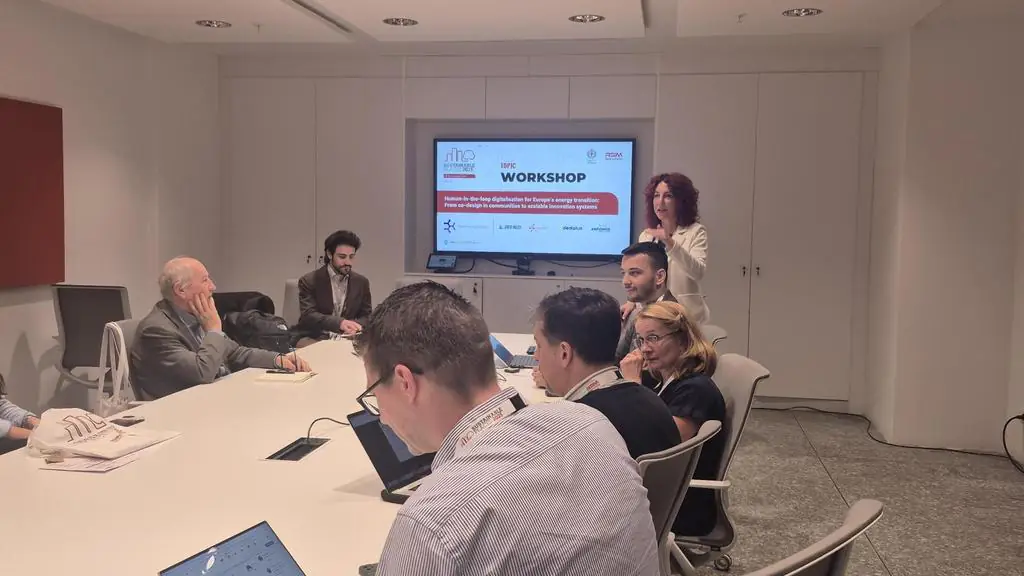
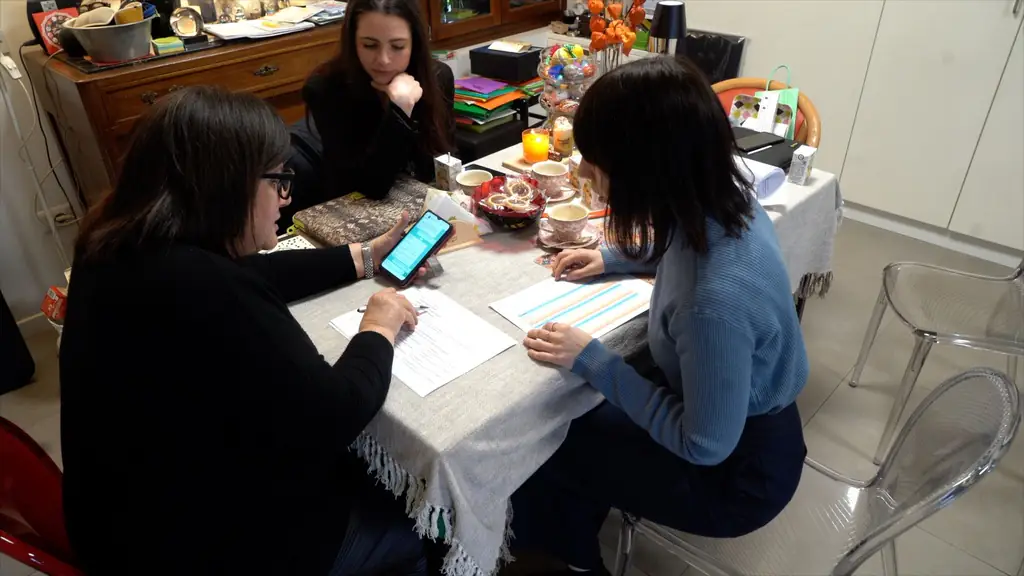
The key takeaways from the "human-in-the-loop" workshop held at Sustainable Places 2025 are now available. They draw on the insights of four EU-funded projects – DEDALUS, CRETE VALLEY, EnerTEF, and ENPOWER.
Digitalisation can only be truly transformative when it keeps humans at its core.
This was the guiding principle behind the workshop “Human-in-the-loop digitalisation for Europe’s energy transition”, organised by Fondazione ICONS – as leader of the DEDALUS dissemination and communication – under the umbrella of the Smart Energy Cluster during Sustainable Places 2025.
The workshop’s main messages are captured in the document “Human-in-the-loop in the Frame of the Energy Transition – Key Takeaways”.
The session brought together DEDALUS and three other EU-funded projects — CRETE VALLEY, EnerTEF, and ENPOWER — to explore how to move beyond the rhetorical use of the term human-in-the-loop and translate it into concrete, people-centred methodologies supporting Europe’s green and digital transitions.
Through an open and multidisciplinary exchange, participants discussed the barriers and enablers shaping the scalability of human-centred digitalisation, highlighting the crucial role of Social Sciences and Humanities, co-creation processes, and trust-building as prerequisites for social acceptance and long-term behavioural change.
Key insights include:
- Moving from concept to implementation by embedding user engagement and co-design from the very start.
- Recognising co-creation and SSH as the foundations of genuine human-centred innovation.
- Shifting from purely financial to social and intrinsic motivations, such as belonging and trust.
- Addressing the “language divide” between technical and social domains.
- Scaling human-in-the-loop approaches from buildings to communities.
The workshop’s conclusions call for a paradigm shift: digitalisation must empower people, not replace them.
Achieving this vision requires continuous collaboration between research, industry, policymakers, and citizens — ensuring that Europe’s energy transition is not only smart but also inclusive, just, and profoundly human.
(Photo Credits: Fondazione ICONS)
Share:


Sustainable Places 2025 – DEDALUS at the workshop on the replicability and upscaling strategies

Organized by ICONS, a partner of DEDALUS, the session highlights replicability and upscaling as key drivers for moving from pilot projects to large-scale market deployment, alongside SUPERSHINE, InEEXs, RENplusHOMES, and SIRCULAR.
The European project DEDALUS will take part in the workshop “From Demonstration to Deployment: Bridging the gap to market uptake”, organised by ICONS as part of Sustainable Places 2025, which will take place in Milan (Italy) from 8 to 10 October 2025.
The session addresses a critical challenge faced by many EU-funded projects: ensuring that innovative solutions tested under pilot or demonstration conditions can be successfully replicated and scaled up, delivering tangible and long-lasting impact beyond the boundaries of a single project. The workshop will therefore explore how to transition from experimentation to real deployment, considering not only technological readiness but also the socio-economic, regulatory, and community dimensions that shape the adoption of innovation.
DEDALUS will share its experience in testing and validating innovative models and technologies in the field of social and collaborative housing, with a strong focus on replicability strategies and on the conditions that enable upscaling across different contexts. The project is exploring how digitalisation, community engagement, and sustainable business models can accelerate the transition from local pilot initiatives to widespread adoption across Europe.
Alongside DEDALUS, other EU projects – SUPERSHINE, InEEXs, RENplusHOMES, and SIRCULAR – will present their own perspectives, challenges, and lessons learned.
Together, they will provide a comprehensive overview of the opportunities and bottlenecks that characterise the path from demonstration to deployment.
For DEDALUS, this participation is both a recognition of the project’s commitment to ensuring the transferability of its results and a valuable opportunity for cross-fertilisation with other initiatives at European level.
The session will take place on Thursday, 9 October 2025, at 4 PM (CEST) in Room 7 at Monterosa 91, Milan.
Find more about our session: Demonstration to deployment – Sustainable Places (SP)
To register to Sustainable Places 2025, click here.
About Sustainable Places
Sustainable Places is Europe’s leading conference on energy transition and sustainability. It brings together researchers, industry leaders, and policy makers to accelerate innovation and promote a resilient, low-carbon future.
(Image by wal_172619 from Pixabay)
Share:
The Smart Energy Cluster workshop at Sustainable Places 2025 highlights “Human-in-the-loop digitalisation” for Europe’s energy transition
Featuring the DEDALUS project as a panelist, the session explores how advanced digital technologies, citizen engagement and innovation ecosystems can enable an inclusive and scalable energy transition.
At Sustainable Places 2025, a major annual conference on energy transition and sustainable built environments, the Smart Energy Cluster will host a workshop entitled “Human-in-the-loop digitalisation for Europe’s energy transition: From co-design in communities to scalable innovation ecosystems”.
[Update: the key takeaways of this workshop are now available at this link].
The workshop will explore how digitalisation of the energy sector, through artificial intelligence, digital twins, blockchain, and data platforms, must evolve beyond pure technology. Active participation, trust, and community-driven governance are key to ensuring that solutions are viable in real contexts and replicable across Europe. A roundtable discussion will highlight human-in-the-loop digitalisation as a multi-level process, empowering citizens and consumers through co-design and participatory governance. This empowerment will ensure interoperability and flexibility across carriers and sectors, and build robust innovation ecosystems that connect SMEs, startups, communities, and industry players.
Four EU projects, as a part of the Smart Energy Cluster, will share their approaches: Crete Valley , developing Renewable Energy Valleys that integrate solar, hydrogen, biogas and district heating with active involvement of local communities; DEDALUS , combining digital tools and behavioural insights to foster adoption of demand-response; EnerTEF , a federated test facility linking SMEs and start-ups with industry to validate and scale AI-based services; and ENPOWER, equipping communities with digital instruments for energy planning and flexibility markets.
By connecting these experiences, the workshop – moderated by Chiara Fonio, Head of Social Innovation at Fondazione ICONS – will show how Europe can build resilient ecosystems where innovation meets legitimacy, and where technological progress translates into tangible impact for people and territories.
The Agenda
11-11:05: Opening
Introduction by the moderator, outlining the objectives of the session and presenting the speakers.
11:05-11:45: Project lightning talks
A series of concise presentations showcasing how European research projects are putting the human factor at the core of smart energy innovation.
11:45-12:05: Focused panel exchange
A short dialogue between the moderator and the speakers, highlighting key insights and setting the stage for audience interaction.
12:05-12:20: Interactive breakout discussions
Participants join small groups to discuss shared questions on bridging social and technical aspects, governance and acceptance, and the scalability of human-centric approaches.
12:20-12:30: Closing wrap-up
Final remarks by the moderator and speakers, summarising the main takeaways from the session.
The session will take place on Thursday, 9 October 2025, at 11 AM (CEST) in Room 7 at Monterosa 91, Milan.
Find more about our session here. To register, here is available the link.
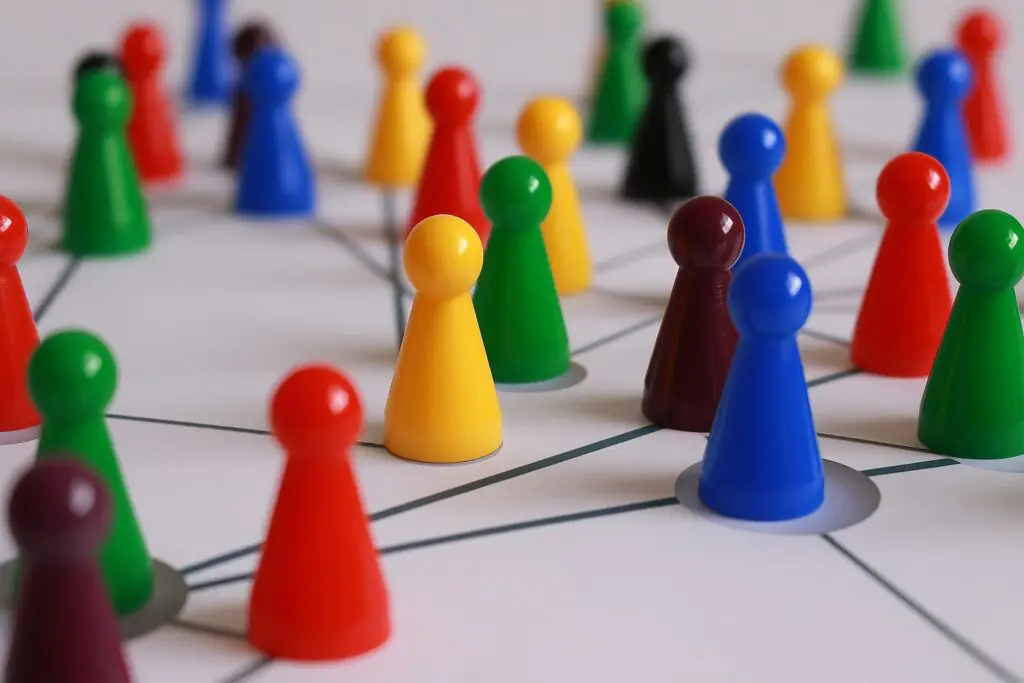
(Image by Gerd Altmann from Pixabay)
Share:
Other updates