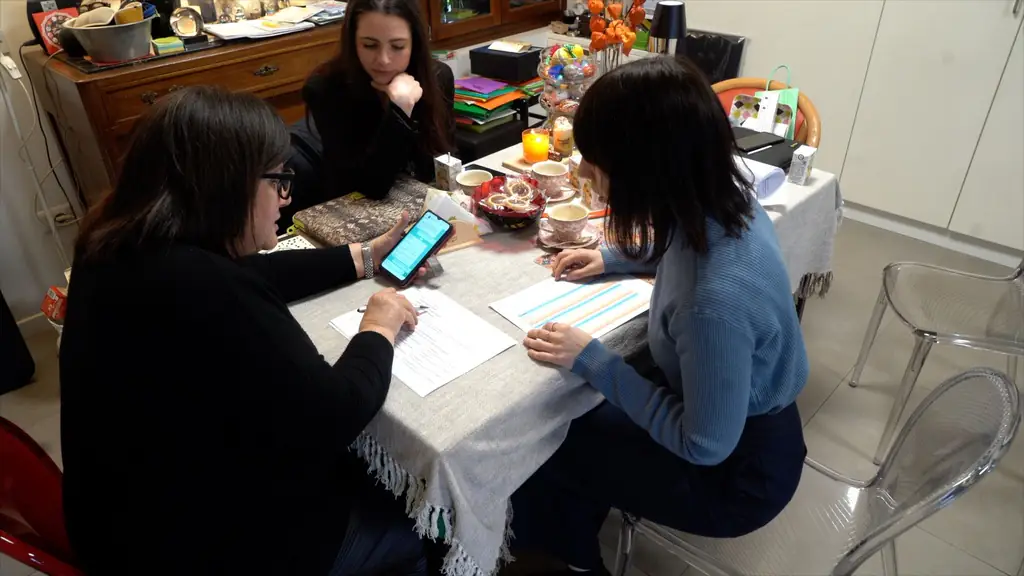
Workshop shares insights on engaging residents in innovation at #ISHF2025
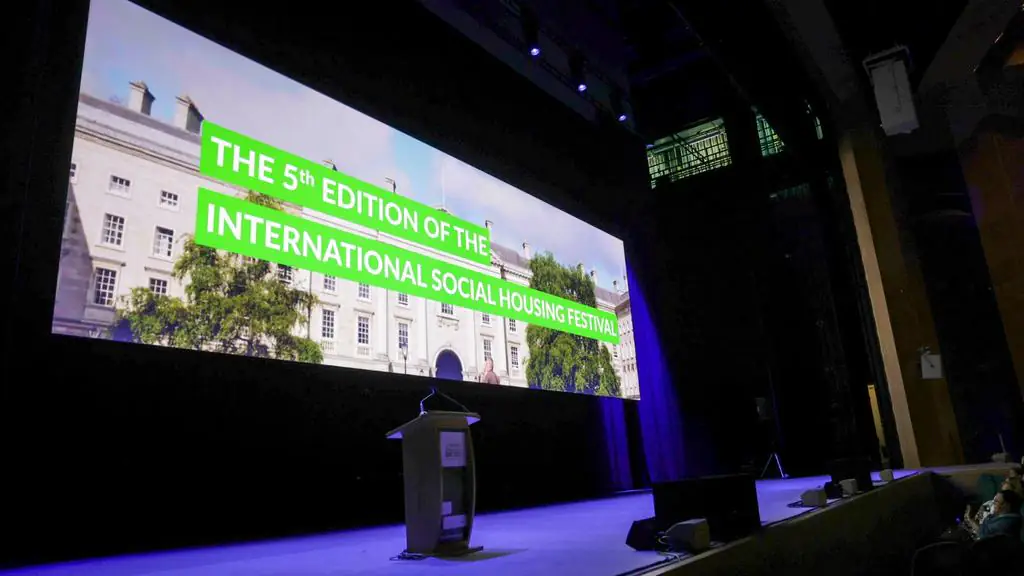
Exploring resident engagement, energy innovation, and inclusive design: insights from the DEDALUS workshop at #ISHF 2025 on how co-creation, reflexive governance, and empowerment can reshape social housing across Europe.
As part of the International Social Housing Festival (ISHF) 2025, held in Dublin from 4 to 6 June, the DEDALUS project hosted the workshop “Innovating Communities: Exploring drivers and barriers of public engagement in social housing”, moderated by Claudia Crippa – Head of Business Innovation at Fondazione ICONS.
At this workshop, practitioners, researchers and housing professionals discussed the transformative potential of involving residents in the design, roll-out and evaluation of social housing projects. Drawing from diverse European experiences, they underscored the critical role of co-creation, inclusive governance, and community empowerment in making housing policies more equitable and resilient.
Methodological Foundations and Participatory Approaches
Chiara Fonio, Head of Social Innovation at ICONS, opened the session by setting a solid conceptual foundation, illustrating how the intersection of social innovation, public engagement, and housing policy can generate structural change. She introduced a framework based on three key pillars: co-creation, reflexive governance, and empowerment.
Co-creation, she explained, entails the direct involvement of residents and stakeholders from the very beginning of the design process—especially when dealing with socio-technical solutions such as energy retrofits or digital platforms. Reflexive governance, a central tenet of DEDALUS, was described not as a theoretical abstraction but as a practical, iterative mode of action, in which strategies are continuously revised based on lived feedback, contextual conditions, and emerging challenges.
Empowerment, finally, is not limited to consultation or awareness-raising. It involves enabling residents to influence decisions at all levels—including, where feasible, shared management of housing resources. Fonio also stressed that effective engagement must be structured and systematic, supported by methodological tools that allow for assessment and accountability throughout the project cycle.
Dimitra Xidous, from the Trinity College of Dublin, brought the audience into the world of age-friendly housing design, grounded in extensive fieldwork and participatory methods. Working with older people across Ireland, her approach is both empathetic and methodologically rigorous. She illustrated how vulnerability is not an intrinsic feature of ageing, but often the product of inaccessible or poorly designed environments.
Her team employs tools such as design personas, daily clocks, and walkability audits to reconstruct and interpret the lived experiences of older residents. These methods help capture how time and space are used in everyday life—informing decisions about layout, mobility, accessibility and spatial comfort. She described how these tools are embedded within a four-stage participatory cycle aligned with standard architectural workflows (e.g., pre-design, construction, post-occupancy), ensuring that residents are involved meaningfully at every phase.
She emphasised that engagement is not a one-off exercise, but a long-term commitment that must be continuously adjusted and validated. Reflexivity, she argued, is essential: every interaction—whether a focus group or a hospital visit—can become an opportunity for dialogue, feedback, and design learning.
Case studies on resident engagement and innovation in social housing
Panos Skaloumpakas, from NTUA and DEDALUS pilots coordinator, presented an in-depth analysis of two pilot cases focused on introducing demand response technologies in social housing environments. His presentation vividly illustrated the complexities of implementing energy innovations in real-life residential settings.
In the first case, located at the Italian pilot, residents had limited or no prior knowledge of basic energy concepts, let alone the specifics of demand response systems. Initial reactions included strong resistance, driven by fear of losing comfort, concerns over data privacy, and frustration with technological complexity. Many were reluctant to adopt solutions they did not understand, particularly when perceived as disruptive or intrusive.
The second case, located at the Danish pilot, involved recently renovated apartments, yet challenges persisted. Despite improved infrastructure, low levels of digital literacy among tenants posed significant barriers. Even basic smart devices, such as heating thermostats, proved difficult to operate for many. To respond, the DEDALUS team moved beyond generic engagement strategies, holding one-on-one support sessions, simplifying interfaces and messages, and even reconsidering the role of automation to reduce perceived burdens on users.
Crucially, Panos Skaloumpakas emphasised that nudging techniques and app-based interventions alone were insufficient. Residents demanded clarity, control, and real human contact. He concluded that energy innovation must be rooted in social sensitivity: without deep contextual understanding, even the best-designed tools may fail.
Cosmo Murray, from Mazì Housing in Athens, offered a moving reflection on the role of trust, reciprocity and community building in shared housing projects for young refugees. Mazì Housing was set up to fill a critical gap in Greek housing provision—specifically for unaccompanied minors who “age out” of the shelter system and are left without safe accommodation upon turning 18.
Rejecting the traditional humanitarian model of “provider–recipient,” Mazì Housing adopts a person-centred approach, where each resident is treated as the expert of their own life. Casework is tailored to individual needs, from legal support to language access and education.
Murray underscored that inclusion is built through everyday micro-moments: informal conversations, shared meals, apartment tours led by fellow residents. These interactions are not incidental but form the relational infrastructure of the project. Residents co-develop house rules, participate in decision-making processes, and provide continuous feedback that shapes how services change. Even safeguarding policies are reviewed in quarterly meetings and discussed collectively—turning abstract governance into shared responsibility.
Finally, Paola Zerilli, from the University of York and coordinator of the SUPERSHINE project, presented a comparative study on energy efficiency investments in social housing across Denmark, Italy and Latvia. Her work focused on bridging the gap between financial feasibility and social equity.
In many cases, funding from national governments was partial or delayed—posing significant barriers for housing providers. To overcome this, Zerilli’s team proposed hybrid financing models, combining public subsidies, energy service companies (ESCOs) and even crowdfunding mechanisms. These models are designed to distribute risk more evenly and, importantly, to ensure that energy savings benefit tenants, not just investors.
The study revealed that involving tenants in the early stages of project design improved both acceptance and feasibility of interventions. Specific attention was paid to scenarios in which full-scale renovations were not viable—whether due to budget limitations or social disruption—and alternative, phased strategies were assessed.
Zerilli concluded that energy transition in social housing must be both environmentally ambitious and socially grounded, with a strong emphasis on resident participation and communication.
A European Platform for Shared Challenges
The International Social Housing Festival provided an ideal backdrop for this workshop, offering a space to anchor local case studies within broader European debates. The DEDALUS session benefited greatly from the festival’s interdisciplinary and transnational scope—reinforcing the idea that resident participation is not a procedural requirement, but a cornerstone of social sustainability.
By sharing practical tools, methodological frameworks, and on-the-ground experiences, the workshop contributed to a deeper understanding of the cultural, social, and technical dimensions of engagement in social housing. It also helped strengthen connections among projects and practitioners committed to shaping a fairer, more inclusive urban future.
(Photo Credits: Naoise Culhane Photography)
Share:


DEDALUS enters strategic deployment phase as smart energy infrastructure goes live across seven European pilots

With infrastructure in place across six countries, DEDALUS enters full deployment mode - driving innovation in residential demand response through real-world testing and advanced data-driven technologies.
In April 2025, the DEDALUS Consortium gathered in Vienna for a new General Assembly focused on the transition from development to deployment. With infrastructure now fully in place across six pilot sites – Austria, Denmark, Greece, Italy, Spain, and Romania – we are entering a new operational phase aimed at real-world engagement with end-users.
This milestone paves the way for the large-scale implementation of DEDALUS technologies in diverse residential contexts. Initial technical workshops held in Spain, Romania, and Denmark have already introduced participants to the platform’s capabilities, while also generating valuable user feedback to inform final refinements. Meanwhile, a new operational partner has joined the new Irish pilot site, where activities are set to resume shortly under a clearly defined roadmap.
Technical Progress and State of the Art
In parallel with pilot implementation, we’ve made significant progress across core technological components:
- Interoperability and IoT: BEKO is currently finalising the integration of installed devices, addressing remaining connectivity issues with smart plugs, and adapting its IoT platform to align with the DEDALUS ontology—ensuring semantic consistency across collected data.
- ETL Processes and Semantic Data Management: Engineering has completed the mapping between extracted data and the project’s ontology vocabulary, and is finalising ETL processes for deployment in the Danish and Italian pilots.
- Ontology: CARTIF is updating the DEDALUS ontology based on new functional requirements identified in three pilot contexts, ensuring comprehensive conceptual representation of key entities and relationships.
- Flexibility Assessment Tools: NTUA has finalised the development of two methodologies—aggregated and disaggregated flexibility—and is now integrating the latter into a dedicated platform for DEDALUS.
- Blockchain Technologies: the Technical University of Cluj-Napoca has finished the deployment of the its blockchain-based demand response solution in the Romanian pilot and has initiated the deployment to the Spanish one. Specific focus has been placed on implementing advanced cryptographic techniques to safeguard both energy and non-energy privacy.
- Privacy, Security, and Data Protection: COMSENSUS is completing the development of the user interface for API Gateway management and its integration with the pilot environments and interoperability layers.
Software Releases and Feature Expansion
Over the past months, we’ve delivered the second wave of digital twins and data-driven services for residential demand response. We’ve developed several technological enablers, which are now available, including:
- Comfort-based flexibility models
- Behavioural nudging mechanisms
- Platforms for pre-aggregated flexibility trading
- Thermal monitoring and pre-control systems
These components strengthen the project’s ability to deliver customisable operational tools for household energy efficiency, adaptable to various regulatory and residential contexts across Europe.
Share:
DEDALUS at FIWARE 2025: A framework for secure, interoperable cities

During this global summit, Engineering - as project coordinator - showcased the DEDALUS approach to secure-by-design smart city applications. From digital twins to decentralised identity, the project translates regulation into action.
The FIWARE Global Summit, the annual event organised by the FIWARE Foundation, brings together public and private stakeholders, technology providers, cities, research institutions, and policymakers to explore open-source digital innovation. The Summit focuses on smart cities, interoperability, data sovereignty, and digital transformation of public services.
The 2025 edition, held for the first time outside Europe, hosted a wide range of thematic sessions addressing current technological and regulatory challenges in the digital domain. Engineering, as coordinator of the DEDALUS project, participated as a panelist in the session “Secure Smart Cities”.
The session focused on the shift from fragmented cybersecurity practices to collaborative, cross-domain security strategies. It featured tools supporting secure-by-design development of urban applications, such as rapid prototyping environments, cybersecurity digital twins, and integrated monitoring frameworks. Special attention was given to decentralised identity frameworks based on verifiable credentials, which enable secure, privacy-compliant access to public services in line with emerging EU regulations.
During the session, Engineering presented the approach adopted within DEDALUS, which provides an operational framework for cybersecurity in smart cities. The project proposes tools for simulating cyber risks, ensuring interoperability across systems, and supporting local authorities in improving the resilience and trustworthiness of digital public services.
(Image from Tao Yuan on Unsplash )
Share:
DEDALUS at FIWARE 2025: A framework for secure, interoperable cities
During this global summit, Engineering - as project coordinator - showcased the DEDALUS approach to secure-by-design smart city applications. From digital twins to decentralised identity, the project translates regulation into action.
The FIWARE Global Summit, the annual event organised by the FIWARE Foundation, brings together public and private stakeholders, technology providers, cities, research institutions, and policymakers to explore open-source digital innovation. The Summit focuses on smart cities, interoperability, data sovereignty, and digital transformation of public services.
The 2025 edition, held for the first time outside Europe, hosted a wide range of thematic sessions addressing current technological and regulatory challenges in the digital domain. Engineering, as coordinator of the DEDALUS project, participated as a panelist in the session “Secure Smart Cities”.
The session focused on the shift from fragmented cybersecurity practices to collaborative, cross-domain security strategies. It featured tools supporting secure-by-design development of urban applications, such as rapid prototyping environments, cybersecurity digital twins, and integrated monitoring frameworks. Special attention was given to decentralised identity frameworks based on verifiable credentials, which enable secure, privacy-compliant access to public services in line with emerging EU regulations.
During the session, Engineering presented the approach adopted within DEDALUS, which provides an operational framework for cybersecurity in smart cities. The project proposes tools for simulating cyber risks, ensuring interoperability across systems, and supporting local authorities in improving the resilience and trustworthiness of digital public services.
(Image from Tao Yuan on Unsplash )
Share:
ICONS to host a seminar on public engagement in social housing contexts at the 2025 International social housing festival

ICONS, as a partner of DEDALUS project, is organising a seminar as part of #ISHF2025 to explore resident engagement strategies and the financial sustainability of interventions in the social housing sector.
On 5 June 2025, the seminar “Innovating Communities: Exploring Drivers and Barriers of Public Engagement in Social Housing” will take place in Dublin, as part of the International Social Housing Festival.
The seminar, organised by ICONS, as a DEDALUS partner responsible for the dissemination, communication, and exploitation activities, will bring together project partners and stakeholders to explore the practical challenges and enabling factors for engaging residents—particularly vulnerable groups—in social housing innovation processes.
Participants will discuss how social housing can support a socially inclusive energy transition and how to address digital, legal, and behavioural barriers. The session will feature presentations, real-world case studies, and interactive tools, and it will foster discussion among practitioners, researchers, housing managers, and policymakers. Special emphasis will be given to trust-building, digital inclusion, financial sustainability, and replicability of engagement strategies.
The Agenda
The seminar will be opened by Chiara Fonio, Head of Social Innovation at ICONS, who will outline the key concepts around social innovation and public engagement, highlighting their relevance in housing transformation processes. It will be moderated by Claudia Crippa (Head of Business Innovation at that same organisation).
Dimitra Xidous, Research fellow at Trinithaus, will present an approach to engaging older adults, showing how participatory processes can be tailored to include individuals with cognitive impairments by centering their lived experience and personal perspectives.
Panos Skaloumpakas, from NTUA, will reflect on lessons learned from the DEDALUS pilots in Denmark and Italy, focusing on practical barriers such as digital exclusion and language challenges, and outlining the solutions implemented to support equitable and meaningful engagement.
Cosmo Murray, co-director at Mazi Housing, will share an organisational model grounded in continuous feedback loops, where current and former residents actively shape internal processes—from project evaluation to staff recruitment and strategic decision-making.
Finally, Paola Zerilli, from University of York and coordinator of the Eu-funded project SUPERSHINE, will address financial barriers and highlight the economic and social benefits of energy efficiency upgrades for both tenants and housing providers, drawing on examples from Italy, Denmark, and Latvia.
The session will include interactive tools to gather direct input from the audience, which will inform future engagement strategies and communication outputs.
The seminar starts at 9.30 AM (Irish Time) in the Liffey Room at the Convention Center of Dublin.
To discover the full programme and participation details for the festival, click here.
(Photo by Anne Nygård on Unsplash)
Share:
Roundtable set to tackle five major challenges of demand response regulation

European Green Cities, a partner in the DEDALUS project, is hosting a roundtable to explore how regulations can evolve to better support demand response. The discussion will focus on five key challenges currently hindering its development.
European Green Cities, as a partner of the DEDALUS project, is hosting a roundtable to tackle a key question: how should national and EU regulations evolve to truly enable the growth of Demand Response programmes?
The event will take place on Tuesday 27 May 2025 from 9.30 AM to 12 PM (all times in CEST),and it will be open to the public.
With input from industry experts, scientific and technological partners of the project, and institutional representatives, the discussion will focus on five major challenges currently hindering the development of demand response:
- lack of effective incentives to engage key stakeholders;
- absence of a clear and consistent regulatory framework;
- interoperability issues across national infrastructure systems;
- entry barriers imposed by DSOs and TSOs;
- complexities in data management and privacy protection.
Confirmed speakers include:
- Thomas Kawam (Policy Officer – Internal Energy Market at DG ENER, European Commission)
- Andrei Vladimir Litiu (Executive Director, EPB Center and Next Gen EPC Cluster)
- Maria Capogreco (Chair of HWG, RHC-ETIP)
- Saska Petrova (Professor of Human Geography, Departmental Research Director, University of Manchester)
- Gusts Kossovics (Managing Director, EUBAC)
- Quentin Donnette (Head of Research and Projects, smartEn – Smart Energy Europe)
- Panos Skaloumpakas (Pilot site coordinator at the DEDALUS project, based at National Technical University of Athens / NTUA)
- Athanasios Papakonstantinou (Innovation Coordinator at the DEDALUS project, R&D Project Manager and Energy Management at HERON)
The roundtable will be moderated by Katerina Sianni (DEDALUS project partner; Data Scientist & Data Visualization Senior Expert at the Energy Policy Unit, NTUA).
Full agenda and access details are available on the European Green Cities website.
(Ph. Randy Fath on Unsplash)
Share:
DigiBUILD to hold conference on its pioneering data-driven services for climate-neutral buildings
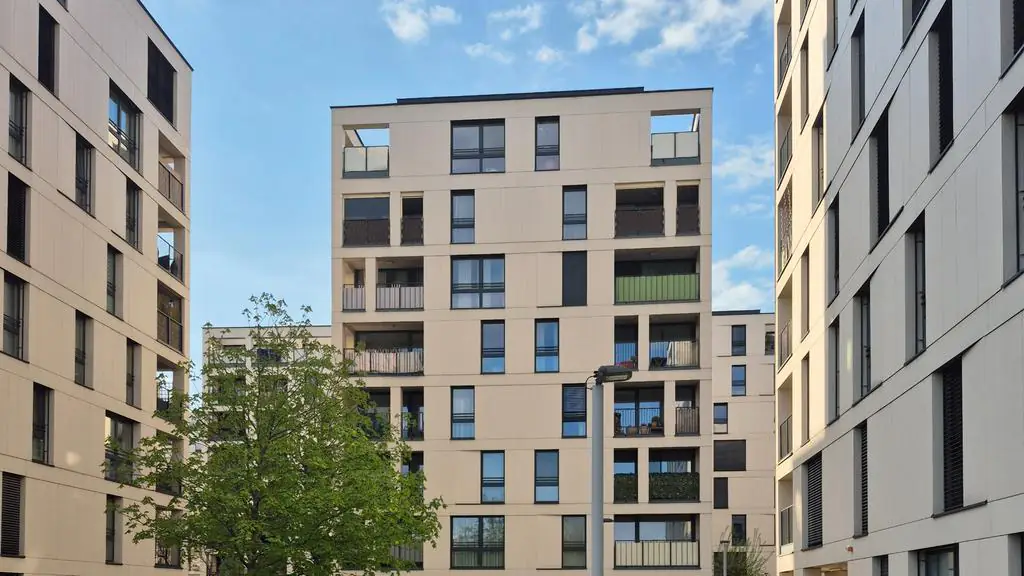
DigiBUILD’s final event celebrates three years of innovation in the digitalisation of the building sector and pass the torch to DEDALUS, which will build on its legacy to advance smarter, greener, and more connected infrastructures across Europe.
The final event of the Horizon Europe project DigiBUILD, one of the DEDALUS sister projects, is approaching and will take place on Tuesday, 20 May 2025 in London and online. This full-day hybrid event will mark the culmination of three years of research and innovation aimed at accelerating the digital transformation of the building sector.
From AI-based tools to data-driven services and digital twin solutions, DigiBUILD has developed a comprehensive suite of technologies to improve building performance, enable evidence-based policymaking, and support end-users in managing infrastructures more efficiently.
Highlights of the event include:
- A presentation of DigiBUILD’s core results and technological breakthroughs
- Live demonstrations and insights from real-world pilot sites across Europe
- A discussion on policy and market uptake
- A guided tour of the UCL demonstration site
“DigiBUILD has demonstrated the power of data collection, data pre-processing and data-driven services, including the adoption of digital twins, as well as the importance of co-creation and co-design in the process of boosting energy efficiency in buildings.
Its innovative tools and open standards now serve as a foundation for the ongoing DEDALUS project that continues the mission of smarter, greener construction, better integrated with the energy grids through the Demand Response mechanism. This marks a key step forward in the EU’s digital and sustainable transformation of the built environment”, stated Diego Arnone – coordinator of DigiBUILD and DEDALUS.
The event will bring together researchers, industry stakeholders, public authorities, and policymakers to reflect on the project’s outcomes and discuss the road ahead for smart, sustainable, and inclusive buildings.
For more information and find out the agenda, click here.
Share:
DEDALUS to co-organise AI and data analytics workshop at IISA 2025
DEDALUS is co-organizing a workshop as part of IISA 2025. The event will gather top AI researchers, energy specialists, and policymakers to discuss innovative approaches that are expected to shape the future of energy analytics over the coming decade.
The DEDALUS project is co-organising the 5th International Workshop on AI & Data Analytics in the Energy Sector, scheduled for 10–12 July 2025 in Mytilene, Greece. This workshop is a key component of IISA 2025.
Coordinated by the DDS Lab at NTUA, the workshop brings together leading AI researchers, energy experts, and policymakers to explore cutting-edge methodologies poised to redefine the next decade of energy analytics.
The event is closely linked to research activities from several Horizon Europe and LIFE projects,including Crete Valley, EnerTEF, ENPOWER, ENERGATE, METABUILD, DATAWiSE, Hedge-IoT, BuildON, CLIMRES, and BUILDSPACE.
“In a world racing toward digitalisation and decarbonisation, data is the new energy. This workshop is a hub for those tackling the complex, high-impact problems at the intersection of AI, analytics, and the energy transition. DSS Lab, EPU NTUA, is thrilled to lead this effort, particularly through our work in the DEDALUS project, where we’re shaping the future of interoperable, intelligent energy solutions.”, stated Elissaios Sarmas – Senior researcher associated at DSS-NTUA and scientific coordinator of DEDALUS.
The workshop will delve into topics such as:
- Generative AI & Large Language Models for real-time energy system management
- AI-powered digital twins for self-learning buildings and grids
- Neuromorphic AI architectures for ultra-low-power energy optimization
- Swarm intelligence & agent-based models for decentralized energy networks
- Federated learning & privacy-preserving AI in energy ecosystems
- Quantum machine learning for next-generation energy forecasting
- Blockchain & AI convergence for secure and autonomous energy trading
- Self-healing energy networks powered by reinforcement learning
A key feature of this year’s workshop is a new session designed by the Smart Energy Cluster — of which DEDALUS has been an active member since 2023 — bringing together leading EU projects committed to advancing smart energy solutions.
Structured as a “Visionary Roundtable”, this segment will offer a series of enlightening talks and interactive discussions, showcasing the breakthroughs, market relevance, and real-world applications of the Cluster’s latest projects.
DEDALUS will be represented in this session by Alessandro Rossi, senior researcher and project manager at Engineering S.p.A.
For more information about the workshop, the deadline for the paper proposal, and to register, please visit the official website.
Image by Joe from Pixabay
Share:
BRIDGE General Assembly 2025: DEDALUS and other European projects in Brussels for digital energy

The annual appointment with the BRIDGE General Assembly returns. Among the participants in Brussels will also be Diego Arnone, coordinator of DEDALUS.
On March 25 and 26, 2025, the BRIDGE General Assembly 2025 took place, a strategic event for the smart grid sector, energy storage, and the digitalization of the European energy system.
A Comprehensive and Innovative Agenda
During the two-day event, participants had the opportunity to explore the key results achieved in 2024 by the BRIDGE working groups and discuss future strategies to enhance synergies between various projects funded by the European Union. The main topics included:
- The integration of smart grids with new digital technologies;
- Opportunities for funding and investment in innovative energy solutions;
- Strengthening collaborations among sector stakeholders.
The Assembly brought together senior officials from the European Commission and its agencies, BRIDGE project coordinators, industry representatives, academics, and investors.
Diego Arnone from Engineering, as the coordinator of DEDALUS, attended the General Assembly in person in Brussels.
Foto di Joshua Sortino su Unsplash
Share:
DomX showcases tangible outcomes of DEDALUS at Mobile World Congress 2025
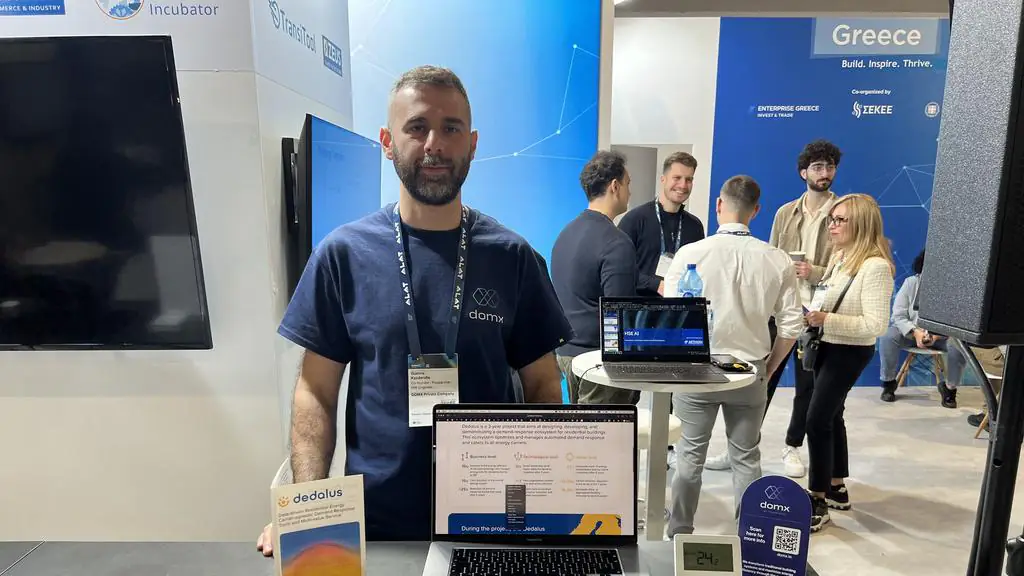
As a partner in the DEDALUS project, DomX showcased its latest innovations at the Mobile World Congress 2025, presenting the functionality and early results of its clustering service aimed at improving demand forecasting and enabling intelligent demand response schemes.
Partner in the DEDALUS project, DomX, presented the project’s lastest innovations to an international audience at the Mobile Word Congress 2025.
On the first day of the event, at the Greek national booth, the DOMX team introduced the functionality and early results of its clustering service, designed to enhance demand forecasting and support the deployment of intelligent demand response schemes. The algorithm segments the households involved in the Greek pilot into homogeneous groups, based on parameters such as heat growth dynamics or potential for energy savings.
This categorisation marks a crucial step towards tailoring interventions and implementing targeted optimisation strategies. In the initial phase of the gas pilot (as a part of the Greek pilot) the clustering algorithm has already identified those households with the highest potential for improved efficiency. For these households, DomX is rolling out optimised demand response schemes aimed at reducing both energy consumption and CO2₂ emissions.
The approach includes active user engagement through behavioural nudging, encouraging end-users to adjust specific parameters of their heating systems. The goal is to promote smoother, more sustainable energy behaviour over time.
The presentation of these outcomes at one of the world’s leading technology innovation events attracted significant interest from international stakeholders, potential replicators, and investors. The DEDALUS project was highlighted as a core component of DOMX’s vision for a smarter, more sustainable, data-driven energy future.
(Photo Credits: DomX)
Share:
Other updates