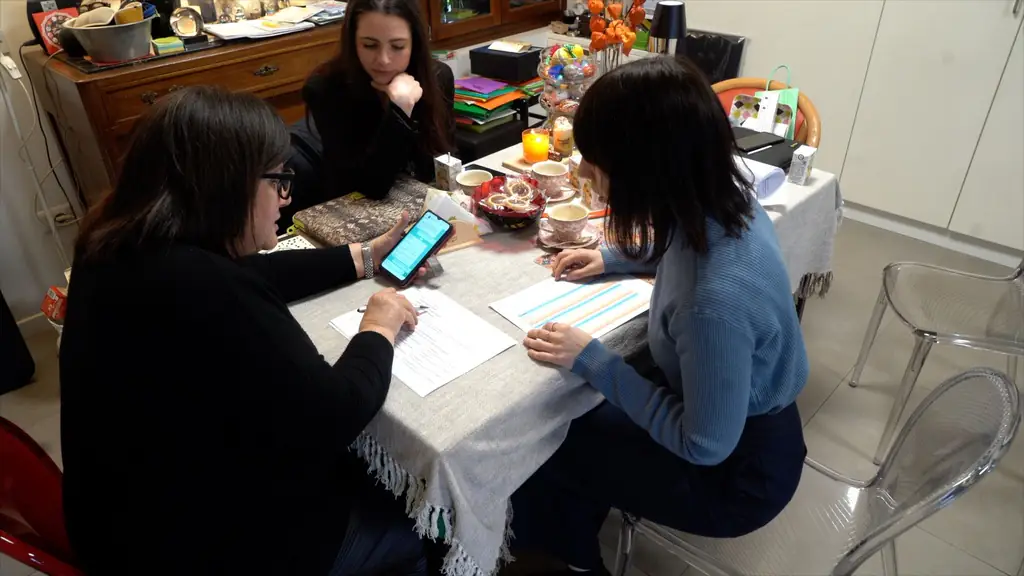
Sustainable Places 2025 – DEDALUS at the workshop on the replicability and upscaling strategies

Organized by ICONS, a partner of DEDALUS, the session highlights replicability and upscaling as key drivers for moving from pilot projects to large-scale market deployment, alongside SUPERSHINE, InEEXs, RENplusHOMES, and SIRCULAR.
The European project DEDALUS will take part in the workshop “From Demonstration to Deployment: Bridging the gap to market uptake”, organised by ICONS as part of Sustainable Places 2025, which will take place in Milan (Italy) from 8 to 10 October 2025.
The session addresses a critical challenge faced by many EU-funded projects: ensuring that innovative solutions tested under pilot or demonstration conditions can be successfully replicated and scaled up, delivering tangible and long-lasting impact beyond the boundaries of a single project. The workshop will therefore explore how to transition from experimentation to real deployment, considering not only technological readiness but also the socio-economic, regulatory, and community dimensions that shape the adoption of innovation.
DEDALUS will share its experience in testing and validating innovative models and technologies in the field of social and collaborative housing, with a strong focus on replicability strategies and on the conditions that enable upscaling across different contexts. The project is exploring how digitalisation, community engagement, and sustainable business models can accelerate the transition from local pilot initiatives to widespread adoption across Europe.
Alongside DEDALUS, other EU projects – SUPERSHINE, InEEXs, RENplusHOMES, and SIRCULAR – will present their own perspectives, challenges, and lessons learned.
Together, they will provide a comprehensive overview of the opportunities and bottlenecks that characterise the path from demonstration to deployment.
For DEDALUS, this participation is both a recognition of the project’s commitment to ensuring the transferability of its results and a valuable opportunity for cross-fertilisation with other initiatives at European level.
The session will take place on Thursday, 9 October 2025, at 4 PM (CEST) in Room 7 at Monterosa 91, Milan.
Find more about our session: Demonstration to deployment – Sustainable Places (SP)
To register to Sustainable Places 2025, click here.
About Sustainable Places
Sustainable Places is Europe’s leading conference on energy transition and sustainability. It brings together researchers, industry leaders, and policy makers to accelerate innovation and promote a resilient, low-carbon future.
(Image by wal_172619 from Pixabay)
Share:


The Smart Energy Cluster workshop at Sustainable Places 2025 highlights “Human-in-the-loop digitalisation” for Europe’s energy transition

Featuring the DEDALUS project as a panelist, the session explores how advanced digital technologies, citizen engagement and innovation ecosystems can enable an inclusive and scalable energy transition.
At Sustainable Places 2025, a major annual conference on energy transition and sustainable built environments, the Smart Energy Cluster will host a workshop entitled “Human-in-the-loop digitalisation for Europe’s energy transition: From co-design in communities to scalable innovation ecosystems”.
[Update: the key takeaways of this workshop are now available at this link].
The workshop will explore how digitalisation of the energy sector, through artificial intelligence, digital twins, blockchain, and data platforms, must evolve beyond pure technology. Active participation, trust, and community-driven governance are key to ensuring that solutions are viable in real contexts and replicable across Europe. A roundtable discussion will highlight human-in-the-loop digitalisation as a multi-level process, empowering citizens and consumers through co-design and participatory governance. This empowerment will ensure interoperability and flexibility across carriers and sectors, and build robust innovation ecosystems that connect SMEs, startups, communities, and industry players.
Four EU projects, as a part of the Smart Energy Cluster, will share their approaches: Crete Valley , developing Renewable Energy Valleys that integrate solar, hydrogen, biogas and district heating with active involvement of local communities; DEDALUS , combining digital tools and behavioural insights to foster adoption of demand-response; EnerTEF , a federated test facility linking SMEs and start-ups with industry to validate and scale AI-based services; and ENPOWER, equipping communities with digital instruments for energy planning and flexibility markets.
By connecting these experiences, the workshop – moderated by Chiara Fonio, Head of Social Innovation at Fondazione ICONS – will show how Europe can build resilient ecosystems where innovation meets legitimacy, and where technological progress translates into tangible impact for people and territories.
The Agenda
11-11:05: Opening
Introduction by the moderator, outlining the objectives of the session and presenting the speakers.
11:05-11:45: Project lightning talks
A series of concise presentations showcasing how European research projects are putting the human factor at the core of smart energy innovation.
11:45-12:05: Focused panel exchange
A short dialogue between the moderator and the speakers, highlighting key insights and setting the stage for audience interaction.
12:05-12:20: Interactive breakout discussions
Participants join small groups to discuss shared questions on bridging social and technical aspects, governance and acceptance, and the scalability of human-centric approaches.
12:20-12:30: Closing wrap-up
Final remarks by the moderator and speakers, summarising the main takeaways from the session.
The session will take place on Thursday, 9 October 2025, at 11 AM (CEST) in Room 7 at Monterosa 91, Milan.
Find more about our session here. To register, here is available the link.
(Image by Gerd Altmann from Pixabay)
Share:
DEDALUS at MetroLivEnv 2025: from data-driven strategies to smarter buildings
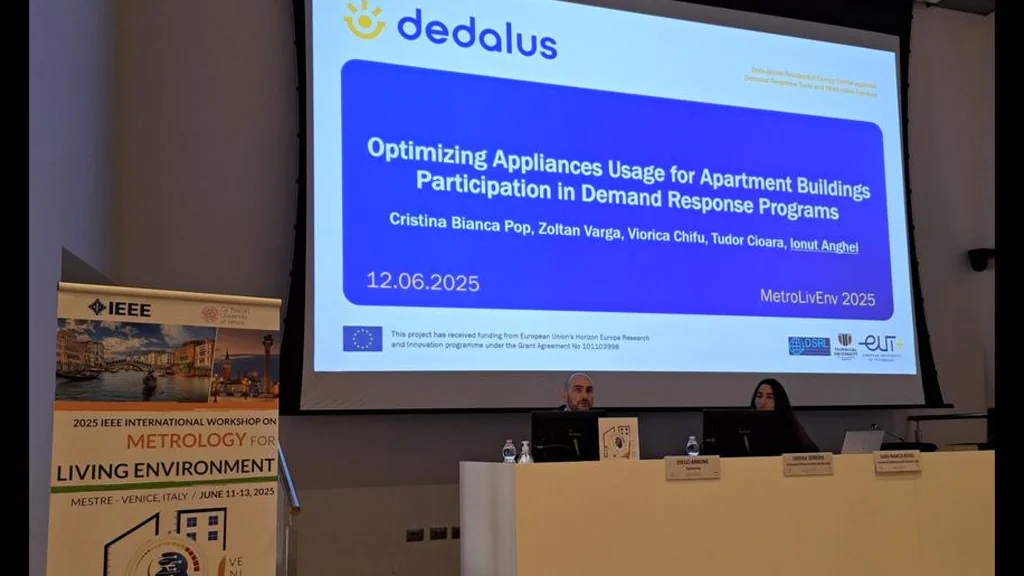
At MetroLivEnv 2025, DEDALUS presented innovative approaches to digital services in the built environment — from smart energy management and predictive modeling to cloud-edge orchestration.
DEDALUS took part in the MetroLivEnv Conference, held in Venice Mestre this summer, bringing its scientific and technological contribution to two special sessions dedicated to the “Application of Digital Services in the Built Environment: Empowering Innovation through High-Quality Data-Driven Measurement Processes to Enhance Demand Response Strategies”.
Coordinated by DEDALUS partners Engineering and Università Politecnica delle Marche, the sessions gathered experts from academia, research, and industry to explore the role of digital services and high-quality data in transforming the built environment. In particular, delegates discussed the development of new demand response strategies, key tools for the intelligent and efficient management of energy resources.
The DEDALUS consortium presented results and innovative approaches in three main areas:
- Optimisation of energy consumption in multi-family buildings, enabling residents’ active participation in Demand Response programmes.
- Integration of predictive market models with automated management of residential heat pumps, fostering more sustainable household energy use.
- Advanced orchestration of workloads across the Cloud-Edge continuum, enhancing the resilience and efficiency of digital infrastructures.
These contributions highlighted how DEDALUS not only promotes the use of digital technologies and advanced measurement systems, but also works to transform buildings into active nodes of the energy network, capable of dynamically responding to market needs.
Beyond DEDALUS’s participation, MetroLivEnv 2025 provided a comprehensive overview of current environmental and technological challenges that engage academia, industry, and policymakers.
Among the most relevant themes featured the development of new environmental monitoring methodologies, with a focus on air and water quality in urban and industrial contexts. Advanced sensor technologies were showcased, which are becoming increasingly miniaturized and integrated with digital platforms, capable of delivering real-time, high-resolution data.
Another key topic was the exploration of measurement technologies for indoor well-being, essential to assess building health and living comfort. Experts stressed how the combination of intelligent sensors, predictive algorithms and cloud platforms enables a more accurate assessment of the impact of technological innovations on people’s health and quality of life.
Several contributions exemplified this research effort, including:
- A study on the optimisation of household appliance use in residential buildings to facilitate participation in Demand Response programmes (Technical University of Cluj-Napoca, Romania);
- A research on the integration of predictive market models with automated management of residential heat pumps, developed by Zenith Gas & Light SA in collaboration with the National Technical University of Athens (NTUA);
- An analysis of the potential of the cloud-edge continuum for the orchestration of containerised workloads, with applications in the energy and industrial sectors;
- A personalized approach to ensure the well-being of vulnerable people during Demand Response events (Università Politecnica delle Marche, Italy).
- A study presenting a methodology for optimizing the distribution of electrical energy generated and stored within renewable energy communities located in the same district (CIMNE)
The conference further underscored the importance of interdisciplinary approaches, combining engineering, environmental sciences and social sciences. The shared goal is to design integrated tools to support policy-makers and private stakeholders in managing cities, providing reliable data and predictive scenarios for more effective sustainability and urban resilience strategies.
(This project update was co-authored by Università Politecnica delle Marche and Fondazione ICONS)
Share:
DEDALUS features in two key BRIDGE reports on sector integration and energy sharing
The project has contributed to two BRIDGE Initiative reports supporting regulatory innovation in energy system integration and citizen-driven energy sharing.
From the outset, DEDALUS has been an active contributor to the regulatory working group of the BRIDGE initiative, led by the European Commission, providing inputs on two key dimensions of the energy transition:
- the integration of energy sectors (electricity, heating, mobility, smart buildings),
- the development of frameworks for energy sharing among citizens, communities and territories, including peer-to-peer trading.
Through its experimental and research activities, DEDALUS has offered its insights on:
- the interaction between electric and thermal systems,
- the deployment of digital, decentralised solutions at household level,
- the identification of persistent regulatory barriers (fragmented rules, limited data access, lack of tailored incentives),
- the promotion of participatory governance models to support energy management at the local scale.
DEDALUS has also taken part in the European conversation on energy sharing, contributing to the analysis of national legal frameworks and highlighting good practices and gaps across Member States. These efforts aim to foster a more equitable, interoperable and citizen-centric energy system across Europe.
The BRIDGE reports: project-based evidence to inform EU policymaking
DEDALUS’ activities and contributions have been included in two official reports published in July 2025 by the BRIDGE Regulation Working Group. These reports consolidate the experiences of over 30 Horizon Europe and H2020 projects and offer strategic guidance to EU and national institutions working to align policy frameworks with the goals of the European Green Deal.
Below the links for download of the two reports:
- Supporting Potential Synergies from Increased Sector Coupling, Sector Integration and System Integration
- Report on Energy Sharing
Share:
DEDALUS contributes to EU dialogue on smart energy at IISA 2025

As part of the Smart Energy Cluster session, DEDALUS will highlight how its people-centred approach to demand response is helping make the energy transition more inclusive and effective.
DEDALUS will take part in the Smart Energy Cluster session of the 5th International Workshop on AI & Data Analytics in the Energy Sector, scheduled for 11 July 2025, in Mytilene, Greece, as part of the 16th International Conference on Information, Intelligence, Systems and Applications (IISA 2025).
Titled “Advancing the Energy Transition with Smart Infrastructure and Engaged Communities“, the session brings together six EU-funded projects—ENPOWER, InEExS, DEDALUS, ENERGATE, HEDGE-IoT, and i-STENTORE—that are developing innovative solutions for a more sustainable, flexible, and inclusive European energy system.
DEDALUS, represented by Alessandro Rossi from Engineering, will show its approach to flexible demand-side management in residential buildings, based on a carrier-agnostic model that integrates socially informed design, co-creation, and active user participation.
The project will contribute to the thematic session “Empowering Communities for a Smarter Energy Future”, focusing on participatory models, energy communities, and digital demand-side services.
The session will provide an overview of emerging technologies and engagement strategies that are accelerating the energy transition in Europe, with a specific focus on regulatory, infrastructural, and behavioural challenges.
Foto di Yusuf Onuk su Unsplash
Share:
DEDALUS enters strategic deployment phase as smart energy infrastructure goes live across seven European pilots

With infrastructure in place across six countries, DEDALUS enters full deployment mode - driving innovation in residential demand response through real-world testing and advanced data-driven technologies.
In April 2025, the DEDALUS Consortium gathered in Vienna for a new General Assembly focused on the transition from development to deployment. With infrastructure now fully in place across six pilot sites – Austria, Denmark, Greece, Italy, Spain, and Romania – we are entering a new operational phase aimed at real-world engagement with end-users.
This milestone paves the way for the large-scale implementation of DEDALUS technologies in diverse residential contexts. Initial technical workshops held in Spain, Romania, and Denmark have already introduced participants to the platform’s capabilities, while also generating valuable user feedback to inform final refinements. Meanwhile, a new operational partner has joined the new Irish pilot site, where activities are set to resume shortly under a clearly defined roadmap.
Technical Progress and State of the Art
In parallel with pilot implementation, we’ve made significant progress across core technological components:
- Interoperability and IoT: BEKO is currently finalising the integration of installed devices, addressing remaining connectivity issues with smart plugs, and adapting its IoT platform to align with the DEDALUS ontology—ensuring semantic consistency across collected data.
- ETL Processes and Semantic Data Management: Engineering has completed the mapping between extracted data and the project’s ontology vocabulary, and is finalising ETL processes for deployment in the Danish and Italian pilots.
- Ontology: CARTIF is updating the DEDALUS ontology based on new functional requirements identified in three pilot contexts, ensuring comprehensive conceptual representation of key entities and relationships.
- Flexibility Assessment Tools: NTUA has finalised the development of two methodologies—aggregated and disaggregated flexibility—and is now integrating the latter into a dedicated platform for DEDALUS.
- Blockchain Technologies: the Technical University of Cluj-Napoca has finished the deployment of the its blockchain-based demand response solution in the Romanian pilot and has initiated the deployment to the Spanish one. Specific focus has been placed on implementing advanced cryptographic techniques to safeguard both energy and non-energy privacy.
- Privacy, Security, and Data Protection: COMSENSUS is completing the development of the user interface for API Gateway management and its integration with the pilot environments and interoperability layers.
Software Releases and Feature Expansion
Over the past months, we’ve delivered the second wave of digital twins and data-driven services for residential demand response. We’ve developed several technological enablers, which are now available, including:
- Comfort-based flexibility models
- Behavioural nudging mechanisms
- Platforms for pre-aggregated flexibility trading
- Thermal monitoring and pre-control systems
These components strengthen the project’s ability to deliver customisable operational tools for household energy efficiency, adaptable to various regulatory and residential contexts across Europe.
Share:
DEDALUS at FIWARE 2025: A framework for secure, interoperable cities

During this global summit, Engineering - as project coordinator - showcased the DEDALUS approach to secure-by-design smart city applications. From digital twins to decentralised identity, the project translates regulation into action.
The FIWARE Global Summit, the annual event organised by the FIWARE Foundation, brings together public and private stakeholders, technology providers, cities, research institutions, and policymakers to explore open-source digital innovation. The Summit focuses on smart cities, interoperability, data sovereignty, and digital transformation of public services.
The 2025 edition, held for the first time outside Europe, hosted a wide range of thematic sessions addressing current technological and regulatory challenges in the digital domain. Engineering, as coordinator of the DEDALUS project, participated as a panelist in the session “Secure Smart Cities”.
The session focused on the shift from fragmented cybersecurity practices to collaborative, cross-domain security strategies. It featured tools supporting secure-by-design development of urban applications, such as rapid prototyping environments, cybersecurity digital twins, and integrated monitoring frameworks. Special attention was given to decentralised identity frameworks based on verifiable credentials, which enable secure, privacy-compliant access to public services in line with emerging EU regulations.
During the session, Engineering presented the approach adopted within DEDALUS, which provides an operational framework for cybersecurity in smart cities. The project proposes tools for simulating cyber risks, ensuring interoperability across systems, and supporting local authorities in improving the resilience and trustworthiness of digital public services.
(Image from Tao Yuan on Unsplash )
Share:
ICONS to host a seminar on public engagement in social housing contexts at the 2025 International social housing festival

ICONS, as a partner of DEDALUS project, is organising a seminar as part of #ISHF2025 to explore resident engagement strategies and the financial sustainability of interventions in the social housing sector.
On 5 June 2025, the seminar “Innovating Communities: Exploring Drivers and Barriers of Public Engagement in Social Housing” will take place in Dublin, as part of the International Social Housing Festival.
The seminar, organised by ICONS, as a DEDALUS partner responsible for the dissemination, communication, and exploitation activities, will bring together project partners and stakeholders to explore the practical challenges and enabling factors for engaging residents—particularly vulnerable groups—in social housing innovation processes.
Participants will discuss how social housing can support a socially inclusive energy transition and how to address digital, legal, and behavioural barriers. The session will feature presentations, real-world case studies, and interactive tools, and it will foster discussion among practitioners, researchers, housing managers, and policymakers. Special emphasis will be given to trust-building, digital inclusion, financial sustainability, and replicability of engagement strategies.
The Agenda
The seminar will be opened by Chiara Fonio, Head of Social Innovation at ICONS, who will outline the key concepts around social innovation and public engagement, highlighting their relevance in housing transformation processes. It will be moderated by Claudia Crippa (Head of Business Innovation at that same organisation).
Dimitra Xidous, Research fellow at Trinithaus, will present an approach to engaging older adults, showing how participatory processes can be tailored to include individuals with cognitive impairments by centering their lived experience and personal perspectives.
Panos Skaloumpakas, from NTUA, will reflect on lessons learned from the DEDALUS pilots in Denmark and Italy, focusing on practical barriers such as digital exclusion and language challenges, and outlining the solutions implemented to support equitable and meaningful engagement.
Cosmo Murray, co-director at Mazi Housing, will share an organisational model grounded in continuous feedback loops, where current and former residents actively shape internal processes—from project evaluation to staff recruitment and strategic decision-making.
Finally, Paola Zerilli, from University of York and coordinator of the Eu-funded project SUPERSHINE, will address financial barriers and highlight the economic and social benefits of energy efficiency upgrades for both tenants and housing providers, drawing on examples from Italy, Denmark, and Latvia.
The session will include interactive tools to gather direct input from the audience, which will inform future engagement strategies and communication outputs.
The seminar starts at 9.30 AM (Irish Time) in the Liffey Room at the Convention Center of Dublin.
To discover the full programme and participation details for the festival, click here.
(Photo by Anne Nygård on Unsplash)
Share:
DEDALUS and DR-RISE help transform demand-response management together

DEDALUS and DR-RISE are joining forces to tackle demand response challenges by facilitating knowledge transfer and enhancing the integration of distributed energy resources in European markets.
DEDALUS and DR-RISE have joined forces to tackle the challenges of demand response through knowledge transfer and joint dissemination activities. Both projects are dedicated to improving the integration of distributed energy resources and optimising demand-side management within European energy markets and therefore, both projects share numerous objectives and address common challenges.
DEDALUS and DR-RISE focuse on creating a demand response ecosystem for residential users by combining advanced ICT technologies with social, innovative business models inspired by the sharing economy and participatory governance. Both projects explore new ways of engaging residential users through participatory and multi-value approaches and conduct ongoing regulatory analysis to bridge legislative gaps and ensure greater accessibility to demand response solutions. Moreover, they aim to make energy demand more flexible and responsive, reducing peak consumption and enhancing grid performance and tackle current barriers like slow deployment of smart meters, the lack of a clear status for independent aggregators, and limited access to energy markets.
Another common challenge is ensuring consumer acceptance and active participation. Raising awareness and providing incentives to encourage engagement are crucial for optimising energy consumption.Securing the involvement of utilities and aggregators is also essential to facilitating the large-scale adoption of these solutions. However, challenges remain, such as the scalability of technologies, which must overcome both technological and regulatory obstacles to be widely applicable. Additionally, the diversity of energy systems across European countries requires increased standardisation to ensure interoperability.
Through their cooperation, DEDALUS and DR-RISE thus seek to maximise the impact of research and promote the adoption of innovative solutions in the demand response sector, contributing to a more efficient, resilient, and sustainable European energy system.
“DEDALUS and DR-RISE have similar objectives and face similar challenges,” stated Diego Arnone, coordinator of DEDALUS. “Launching a collaboration between the two research initiatives is beneficial not only for the two projects, but also for the residential energy consumers who, properly engaged and by means of proper disruptive technologies, can start to participate in new demand response programs. This will be a significant step toward energy efficiency, energy consumption awareness and carbon footprint reduction”.
“The synergistic integration of these two projects is expected to amplify their impact, enhancing the efficiency and scalability of energy management solutions across European grids and energy communities,” said Axel Bruck – DR-RISE coordinator. By pooling resources, knowledge, and innovation, the collaborative efforts are anticipated to deliver more robust demand-side strategies, expanding access to residential end-users, and contribute significantly to the EU’s ambitious targets for energy sustainability and ecological transition.
(Photo Credits: Image by iStock)
Share:
Empowering citizens to shape the future of energy

The DEDALUS project places citizens at the core of sustainable energy management, empowering them to take control of their consumption through advanced technology and a user-centered approach. This synergy between people and technology paves the way for a more resilient energy future.
DEDALUS is an innovative European project designed to revolutionise the way residential energy demand response (DR) is approached, with a focus on energy efficient homes.
Its overarching goal is to develop a flexible, user-centred ecosystem for demand response that effectively engages residents in managing their energy consumption.
Leveraging advanced technologies such as artificial intelligence (AI), the internet of things (IoT) and blockchain, the project aims to deliver multi-value, energy carrier-agnostic solutions adaptable to various European contexts, both geographically and climatically.
User-centric approach
DEDALUS recognises that achieving sustainable energy efficiency on a large scale requires more than just technical advancements; it requires the active involvement of end-users. Rather than viewing residents as passive consumers, DEDALUS treats them as essential participants in the energy transition, integrating their preferences and motivations directly into the design and functionality of DR solutions.
This user-centric approach is supported by a robust social science framework, which draws on behavioural science, motivation theories and socio-economic factors to understand how different segments of the population interact with energy saving technologies and programmes.
Through this framework, DEDALUS aims to overcome common obstacles to the adoption of DR solutions by addressing users’ real needs for comfort, customisation and energy and environmental literacy.
One of the core innovations of DEDALUS is its co-creation approach, where end-users are actively involved in the design and evaluation processes. Through workshops, segmentation analysis and feedback on tool interfaces, the project gathers essential insights that help refine its strategies and tools.
These co-creation activities explore key drivers and barriers to user participation in demand response, assessing which factors – like comfort, data privacy and energy and environmental literacy – play a critical role in encouraging or discouraging engagement.
By identifying specific user profiles, DEDALUS can target its communication and engagement strategies, tailoring incentives and interfaces to different types of users across pilot sites. For example, some profiles may require more educational support regarding energy saving benefits, while others may need advanced customisation options in their DR tools.
Technology and business models
In addition to its user-centred design, DEDALUS places emphasis on developing the technological infrastructure necessary for a seamless DR experience. The integration of social science insights into the technological framework has led to an enhanced software architecture that prioritises accessibility, security and user-friendly interfaces.
The project’s technical work packages ensure that DR solutions not only support user engagement but also align with broader energy system requirements. Advanced machine learning techniques, for instance, are employed to analyse electricity load profiles, helping identify and optimise demand response opportunities while respecting user comfort preferences.
Furthermore, DEDALUS explores innovative business models to support the long-term sustainability and scalability of DR solutions, considering economic incentives that appeal to a wide range of users. By involving users from diverse backgrounds and geographical regions, the project builds a replicable model that can be adapted across the European Union, laying the groundwork for a unified approach to residential DR that supports regulatory harmonisation and market stability.
Ultimately, the DEDALUS project seeks to position residential communities as active stakeholders in the energy transition. By combining cutting-edge technology with a deep understanding of user behaviour and preferences, the project not only advances the field of demand response but also contributes to the creation of a more resilient, sustainable and user-driven energy ecosystem across Europe.
(The original version of this article is available at this link on the ENLIT media platform).
Image by Michael Schwarzenberger from Pixabay
Share:
Other updates